One Year After Pahalgam Attack, Families of Victims Continue to Live With the Weight of Loss
“Terror ends in minutes, but for families left behind, its consequences continue every single day.”
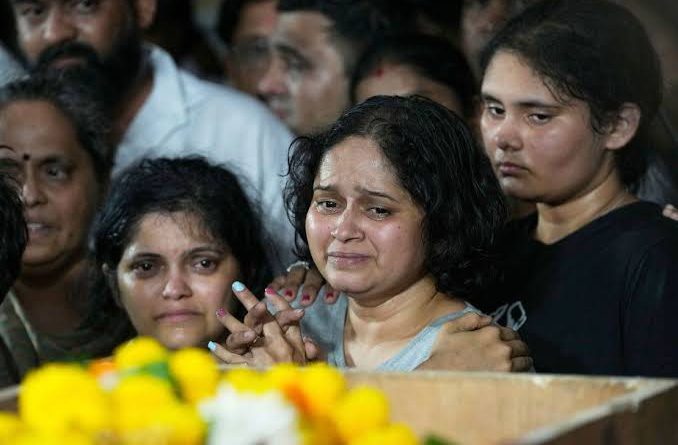
Nearly a year after the April 22, 2025 terror attack in Pahalgam that killed 26 tourists, the families of victims such as Manjunath Rao and Bharath Bhushan continue to struggle with grief, trauma and the lasting psychological consequences of the violence.
The attack, which took place in the Baisaran Valley area of Pahalgam in Indian-administered Kashmir, remains one of the deadliest assaults on civilians in the region in recent years. Armed attackers opened fire on tourists, killing 26 people, many of whom were visiting Kashmir with their families.
The incident triggered a strong political and military response from India, including Operation Sindoor, which targeted what New Delhi described as terrorist bases in Pakistan.For the families of those killed, however, the consequences have extended far beyond national security and diplomatic tensions. A year later, many remain trapped in the emotional aftermath of that day.
Among the victims was Manjunath Rao, a realtor from Shivamogga in Karnataka, who had travelled to Kashmir with his wife and son for what was meant to be their first family visit to the Valley. According to family members, the trip was planned as a personal milestone and an opportunity to spend time together away from work and routine responsibilities.
Instead, it ended in violence.
Rao was shot dead during the attack in front of his wife and son, an experience that relatives say has left deep and continuing emotional scars on the family. His relative, Ravi Kiran, told local media that the family has found it difficult to recover from the shock of witnessing the killing directly.
The trauma, according to relatives, is intensified by the fact that the death unfolded in front of his immediate family. His wife and child were not only left to cope with the loss of a husband and father, but also with the memory of the attack itself.Family members say daily life has not returned to normal.
Routine activities continue, but the emotional burden remains. The family has attempted to move forward, yet the event continues to shape conversations, relationships and personal well-being.Mental health experts often note that violent loss witnessed firsthand creates a prolonged form of trauma, particularly for spouses and children.
In such cases, grief is frequently accompanied by recurring memories, anxiety and emotional withdrawal. While the report does not provide clinical details, relatives describe the family’s condition as one of continuing struggle rather than closure.
Another victim, Bharath Bhushan, was an IT professional from Bengaluru who was also among those killed in the same attack. Like Rao, he had travelled as a civilian tourist and was not connected to any political or security institution.Bhushan is survived by his wife and son.
According to the report, his family has chosen to remain largely silent in public, reflecting what relatives describe as the depth of their grief.His father reportedly expressed severe emotional distress and has found it difficult to speak openly about the loss. The silence of the family has itself become part of the story, illustrating how some families respond to tragedy not through public statements, but through withdrawal and private mourning.
The absence of public engagement does not lessen the impact. Rather, it reflects a different form of coping in which grief remains internal, often making recovery slower and more isolating.
For Bhushan’s wife and child, the long-term challenge is both emotional and practical. The sudden death of a family’s primary earning member can reshape household stability, financial planning and emotional security. Though the report focuses primarily on emotional trauma, the broader implications of such losses often extend into every aspect of family life.
The Pahalgam attack also had immediate strategic consequences. India responded by launching Operation Sindoor, a military action targeting locations identified as terrorist infrastructure across the border in Pakistan. The operation was presented as part of a broader national security response following the killings.
The incident intensified already fragile India-Pakistan relations and brought renewed focus to cross-border terrorism and civilian security in Kashmir. It also reshaped political discourse around counterterrorism policy and tourism security in the region.However, for the families directly affected, geopolitical responses offered little immediate relief.
For them, the central reality remains deeply personal: the absence of a husband, father, son or provider whose death cannot be reversed by military retaliation or political declarations.The report from Shivamogga places particular attention on how families continue to live with trauma long after public attention fades.
News coverage often focuses on the day of an attack, the number of casualties and the government response, but survivors and relatives continue to navigate consequences that unfold over months and years.
In Rao’s case, relatives describe a family trying to rebuild daily life while carrying memories of direct violence. In Bhushan’s case, silence and emotional withdrawal indicate grief that remains unresolved.Both cases reflect a broader truth about acts of terrorism: the damage extends beyond those killed. It enters homes, alters childhoods, changes family structures and creates emotional disruptions that may last for decades.
One year later, the names of the victims remain tied not only to the attack itself, but to the ongoing struggle of those left behind.
As public memory moves forward and political attention shifts elsewhere, families like those of Manjunath Rao and Bharath Bhushan continue to live with a reality that remains unchanged since April 22, 2025 a moment of violence that permanently divided life into before and after.