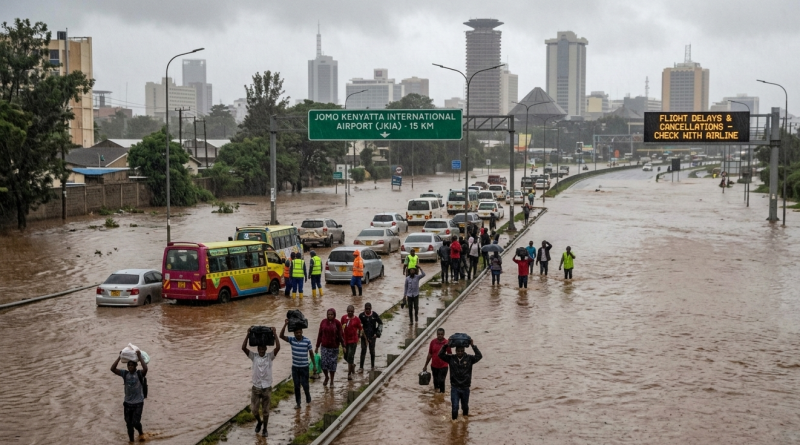
Deadly Nairobi floods kill 23, paralyse airport and city infrastructure
NAIROBI, March 7 — Flash floods that struck Kenya’s capital overnight killed at least 23 people, swept away vehicles and disrupted flights at East Africa’s largest airport on Saturday, authorities said, as emergency teams searched flooded neighbourhoods and rivers for victims.
Kenyan President William Ruto said the government had deployed emergency responders, including soldiers, to coordinate rescue operations across Nairobi after intense rainfall triggered flooding that overwhelmed parts of the city and caused widespread damage.“I have also ordered that relief food from our national strategic reserves be immediately released and distributed to families affected by the floods,” Ruto said in a statement posted on social media, while offering condolences to communities affected by the disaster.The flooding disrupted operations at Jomo Kenyatta International Airport, the busiest aviation hub in East Africa, forcing flight delays as large sections of the capital struggled with inundated roads and damaged infrastructure.
Aid workers and emergency responders spent hours pulling bodies from floodwaters across the city after the Nairobi River burst its banks, sending powerful currents through densely populated districts and industrial areas.In the industrial neighbourhood of Grogan, residents and rescue teams surveyed vehicles that had been pushed together by fast-moving water and debris. A Reuters reporter witnessed three bodies being pulled from beneath cars that had been swept away during the flooding.John Lomayan, a 34-year-old security guard, stood near the wreckage of a vehicle under which the body of an elderly roadside egg vendor he recognised had become trapped.Authorities said several victims were killed when damaged power lines fell into floodwaters, leading to electrocutions in submerged areas.Infrastructure damage spreads across the capitalKenya’s national electricity provider, Kenya Power, said floodwaters damaged equipment at one of its substations, disrupting electricity supply in several parts of the capital.The company listed at least 14 neighbourhoods where residents were affected by outages following the damage to grid infrastructure.Floodwaters also carried vehicles, street stalls and debris through residential and commercial districts, leaving parts of the city impassable.
“So many cars, so much stuff, I don’t know. Everything was just washed away,” said Cedric Mwanza, a resident who watched the rising water surge through streets near the river. “All of the water came from that river.”
Flooding has increasingly affected urban areas in East Africa, where heavy rainfall and expanding city populations have placed pressure on drainage systems and riverbanks.Scientists and climate researchers have warned that climate change is intensifying rainfall patterns across the region, increasing the risk of flash floods and infrastructure damage in major cities.In Nairobi, the latest flooding exposed vulnerabilities in low-lying neighbourhoods built along riverbanks and flood-prone areas, where fast-moving water can quickly overwhelm roads, homes and public services.Emergency teams continued searching flooded districts on Saturday as authorities assessed damage and coordinated relief assistance for displaced families.