Taiwan Opposition Chief Claims Washington Outreach Surpassed Expectations Amid Defense Scrutiny
Taipei-Taiwan’s main opposition leader Cheng Li-wun said on Wednesday that a two-week visit to the United States exceeded expectations, as she sought to strengthen support for her party’s approach toward China while facing criticism at home over defense spending and security policy.
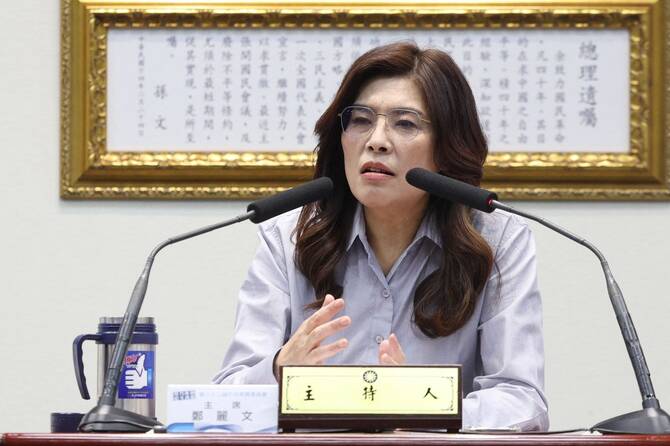
Speaking at a news conference in Taipei following her return, the chairwoman of the Kuomintang (KMT) said meetings with U.S. lawmakers, government officials, policy experts and supporters had been positive and encouraging. She did not disclose specific outcomes or agreements resulting from the trip.
“Our meetings with the U.S. side were very positive,” Cheng said, adding that many discussions with members of the administration were confidential.
The visit came as the KMT faces scrutiny over its role in blocking a Taiwanese government proposal to allocate nearly $40 billion for military procurement, including U.S.-supplied weapons systems and domestically manufactured drones.
Cheng rejected reports suggesting she had been unable to secure meetings with senior U.S. security officials and said American interlocutors demonstrated strong understanding of the party’s positions, including its support for military cooperation with Washington and efforts to enhance Taiwan’s defense capabilities.
The KMT leader said her party remained committed to strengthening Taiwan’s security while pursuing policies aimed at reducing tensions across the Taiwan Strait.
Political analysts questioned the significance of the visit, noting the absence of publicly announced high-level meetings. Wen-Ti Sung, a political analyst at the Atlantic Council’s Global China Hub, described Cheng’s reception in Washington as relatively restrained.
“Judging by public information, Cheng did not even get to meet working-level officials at, say, Assistant Secretary level — let alone further up the hierarchy,” Sung said. He added that the limited disclosure surrounding the meetings could indicate lingering reservations among U.S. officials.
Cheng has emerged as one of the most influential figures in Taiwanese politics since unexpectedly assuming leadership of the KMT last year. Her advocacy of closer engagement with China has attracted criticism from opponents who argue that such positions risk undermining Taiwan’s security interests.
The KMT has historically favored stronger ties with Beijing, which claims Taiwan as part of its territory and has repeatedly stated it reserves the right to use force to bring the island under its control.
The U.S. trip followed Cheng’s visit to Beijing two months ago, during which she met Chinese President Xi Jinping, marking the first meeting between a KMT leader and the Chinese leader in a decade. The visit also came weeks after U.S. President Donald Trump held talks with Xi in the Chinese capital.
Although Washington shifted diplomatic recognition from Taipei to Beijing in 1979, the United States remains Taiwan’s principal security partner and largest source of defensive military equipment.
Recent comments by President Trump suggesting that U.S. arms sales to Taiwan could potentially be used as leverage in broader negotiations with China have heightened concern among policymakers and security analysts about the future trajectory of U.S.-Taiwan relations.
Sung said Cheng’s Washington visit appeared designed to demonstrate her ability to engage both Beijing and Washington while presenting herself as a credible foreign policy figure. He added that success in balancing those relationships could strengthen speculation about a potential bid for Taiwan’s presidency in 2028.