
Trump threatens intensified strikes on Iran and possible seizure of oil infrastructure
Washington-U.S. President Donald Trump on Thursday threatened intensified military action against Iran and raised the prospect of taking control of key Iranian energy infrastructure, as Washington and Tehran exchanged attacks for a second consecutive day despite efforts to revive diplomatic negotiations.
In a social media post, Trump said the United States would strike Iran “VERY HARD TONIGHT” and declared that Washington would “assume total control” of Iran’s oil and gas sector, including the strategically important Kharg Island export terminal, at some point in the future.
Trump did not provide details on how such a move could be carried out. Kharg Island is the main hub for Iranian crude exports and a critical source of revenue for the country’s economy. The island is located off Iran’s Gulf coast and serves as a central artery for the nation’s energy shipments.
The comments came as the U.S. military launched a new wave of strikes against Iranian military targets, broadening a campaign that appeared more extensive than operations conducted a day earlier.
U.S. Central Command (CENTCOM) said American forces carried out additional strikes against Iranian surveillance systems, communications infrastructure and air defense facilities. According to the command, U.S. Marine Corps, Air Force and Navy assets employed precision-guided munitions against targets viewed as threats to American personnel and commercial maritime traffic in regional waters.
CENTCOM described the operations as defensive measures conducted in response to what it called continuing Iranian aggression.
Iran condemned the attacks, with the Foreign Ministry saying the latest U.S. military action effectively rendered a ceasefire that had held for nearly two months “practically meaningless.”
In a statement, the ministry said the strikes represented a violation of international norms and warned that responsibility for any serious consequences would rest with U.S. leaders.
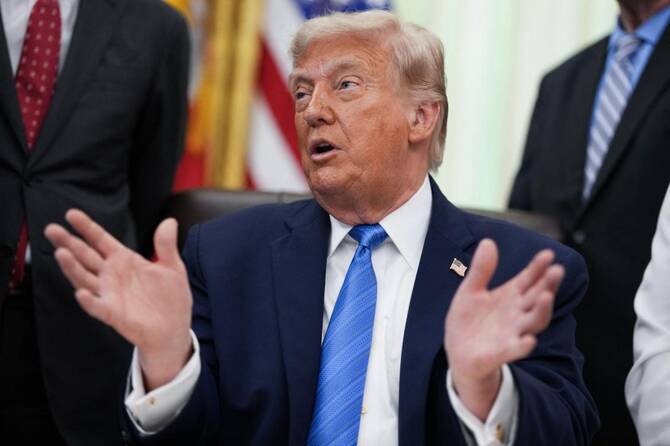
Speaking at the White House, Trump said military pressure on Iran would continue while diplomatic channels remained open.
“We’re going to be attacking them very hard,” Trump told reporters, while reiterating his administration’s desire for a negotiated settlement.
The president said Washington sought an agreement that would permanently prevent Iran from acquiring a nuclear weapon. He claimed Tehran had accepted the principle of foregoing nuclear arms but said a final accord had not been concluded.
Defense Secretary Pete Hegseth echoed the administration’s warnings during a visit to the U.S. naval base at Guantanamo Bay, Cuba.
Hegseth said the strikes were intended to protect American forces and cautioned Tehran against escalating the confrontation further.
“Iran would be unwise to challenge us further,” he said.
The latest exchange has heightened concerns about a broader regional conflict involving the United States and Iran, while adding uncertainty to energy markets and international diplomatic efforts aimed at reducing tensions in the Middle East.
Despite the military escalation, U.S. officials continued to emphasize that diplomacy remains Washington’s preferred path, provided any future agreement includes lasting guarantees that Iran will not develop a nuclear weapons capability.

