
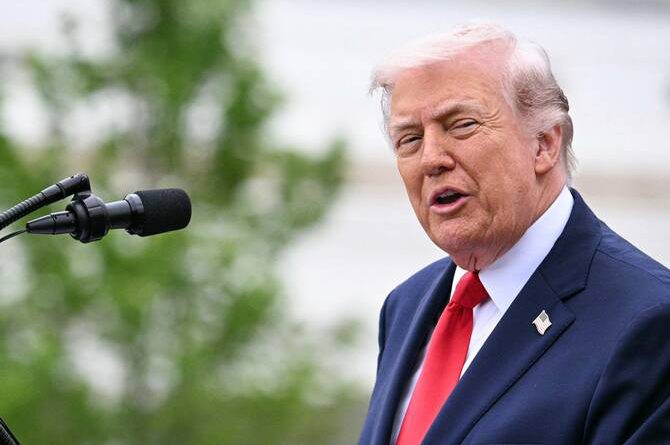
Trump Orders Extended Iran Blockade as Nuclear Talks Stall
Washington – President Donald Trump has instructed U.S. national security officials to prepare for a prolonged blockade of Iranian ports, opting for sustained economic pressure over renewed military strikes as Washington seeks to force Tehran to curb its nuclear program, the Wall Street Journal reported on Tuesday.
Citing U.S. officials familiar with the matter, the report said Trump concluded during a White House Situation Room meeting on Monday that both resuming bombing campaigns and fully stepping back from the conflict carried greater risks than maintaining a naval squeeze on Iran’s oil exports and shipping routes.
According to the report, Trump believes Iran is not negotiating in good faith and wants Tehran to suspend uranium enrichment for 20 years while accepting strict long-term restrictions on its nuclear activities. Officials said the administration views the blockade as a way to intensify pressure without immediately reopening large-scale military operations.
Trump signaled frustration publicly on Wednesday, writing on his Truth Social platform that Iran “can’t get their act together” and warning Tehran to “better get smart soon.”
“Iran can’t get their act together. They don’t know how to sign a nonnuclear deal.They better get smart soon!” Trump posted, alongside an image carrying the caption “NO MORE MR. NICE GUY!”The reported strategy would rely on the U.S. Navy continuing efforts to restrict vessels traveling to and from Iranian ports, further tightening pressure on oil exports that are central to Iran’s economy.
Analysts say the approach risks extending instability around the Strait of Hormuz, one of the world’s most critical energy transit routes.Oil markets reacted sharply to reports of a prolonged blockade, with Brent crude rising to a one-month high above $114 a barrel on concerns over sustained supply disruption and continued uncertainty over shipping through the Hormuz corridor.
The White House has not formally announced a policy shift, and Iranian officials have not publicly responded to the Wall Street Journal report.The decision suggests Washington may be preparing for a prolonged standoff in which active fighting remains limited but diplomacy remains frozen, leaving the conflict in what analysts describe as a “no-deal, no-war” phase.


