U.S. Blockade of Iran Ports Raises Ceasefire Risks, Deepens Strategic Standoff
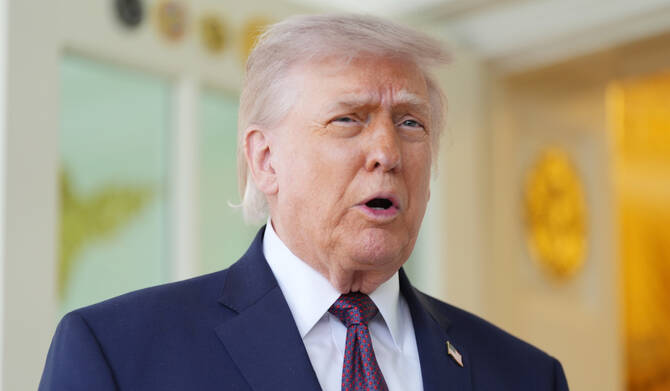
Jerusalem— U.S. President Donald Trump said on Monday that American forces have blockaded Iran’s ports, a move that has heightened tensions and cast doubt on a fragile ceasefire following inconclusive negotiations between the two sides.
The announcement came a day after talks in Pakistan ended without agreement, underscoring persistent divisions over terms to end a conflict launched on Feb. 28 by the United States and Israel. The blockade is aimed at pressuring Iran to reopen the Strait of Hormuz and accept a broader settlement addressing its nuclear and missile programs, as well as its regional activities.
Trump indicated that diplomatic channels remain open, saying Iran had reached out to explore a possible resolution. “We’ve been called by the right people … and they want to work a deal,” he told reporters outside the White House.Iran signaled conditional openness to negotiations.
Judiciary chief Gholam Hossein Mohseni Ejei said discussions must proceed on the basis of “principles and logic,” while other officials warned that Tehran would respond if the situation escalates.The blockade drew sharp reactions from Iran, which threatened countermeasures targeting ports across the Arabian Gulf and Gulf of Oman, raising the risk that the two-week ceasefire declared earlier could collapse before its April 22 expiry.
At the core of the dispute remain differences over Iran’s nuclear program and control of the Strait of Hormuz, a critical global energy corridor through which roughly one-fifth of the world’s oil supply typically passes. Its closure has already disrupted markets and driven up oil prices.
U.S. Vice President JD Vance, who led the American delegation in the recent talks, said Iran had not provided assurances it would refrain from pursuing nuclear weapons capability. Tehran has long denied such intentions while defending its right to civilian nuclear development, including uranium enrichment.
Iran’s negotiating position, articulated by Parliament Speaker Mohammad Bagher Qalibaf, emphasized sovereignty over the strait, an end to hostilities, and compensation for wartime damage.
Iranian officials also dismissed the blockade as exaggerated, with parliamentary spokesperson Ebrahim Rezaei describing it as “more bluffing than reality.”Pakistan has indicated it may facilitate further dialogue, with Foreign Minister Ishaq Dar expressing willingness to host another round of talks, though no timeline has been confirmed.
Both sides have maintained firm public positions, with Trump warning that any Iranian attempt to challenge the blockade would be met with force, while Iranian foreign ministry spokesperson Esmaeil Baqaei said the measure risked further destabilizing the global economy.