Forgotten Histories of Black Women Gain Renewed Attention in Modern Scholarship
“Recovering overlooked histories is not about replacing existing narratives, but ensuring that those long absent from the historical record are finally documented.”
Research examining the historical experiences of Black women is receiving growing academic attention as historians seek to address longstanding gaps in the study of slavery, colonialism and resistance. Scholars argue that while the institution of transatlantic slavery has been extensively documented, the experiences of Black women have frequently been examined through broader narratives that often overlook the specific forms of violence, discrimination and leadership that shaped their lives.
Historians studying the Atlantic world have increasingly focused on how race and gender intersected to influence the treatment of enslaved women and girls. Their work examines not only forced labour and family separation but also sexual exploitation, legal discrimination and the limited recognition afforded to Black women’s contributions in resistance movements. Researchers say these themes have historically received less attention than political or military accounts of slavery and abolition.
Among the concepts informing recent scholarship is “misogynoir,” a term introduced by Black feminist scholar Moya Bailey to describe the specific form of prejudice experienced by Black women at the intersection of racism and sexism. Academic research has also explored the “adultification” of Black girls, a concept referring to the tendency for children to be perceived as older or less in need of protection than their peers. Scholars argue that these frameworks help explain historical and contemporary disparities in how Black women and girls have been treated within legal systems, public institutions and society more broadly.
One historian interviewed on the subject said broader public discussions surrounding gender-based violence should include the experiences of Black girls alongside those of other vulnerable groups. According to the historian, public debate has increasingly acknowledged the exploitation of disadvantaged white girls in some historical contexts, but comparable attention has not always been given to Black girls despite evidence that they faced distinct and often overlapping forms of vulnerability under systems of slavery and colonial rule.
The historian argued that recognising these experiences is essential to developing a more comprehensive understanding of historical violence against women. Greater visibility, the scholar said, would contribute to a more complete historical record rather than creating competing narratives about victimhood.
Recent research has also highlighted the role of Black women in organised resistance against enslavement and colonial rule. While many historical accounts have traditionally focused on political leaders or military commanders, historians have documented the involvement of women who organised rebellions, gathered intelligence, preserved cultural traditions and supported resistance networks across Africa and the Caribbean.
Among the figures frequently examined is Queen Nzinga of Ndongo and Matamba, who led prolonged resistance against Portuguese colonial expansion in what is now Angola during the seventeenth century. Her diplomatic and military leadership has been widely recognised by historians as one of the most significant examples of African resistance to European colonial ambitions during the period.
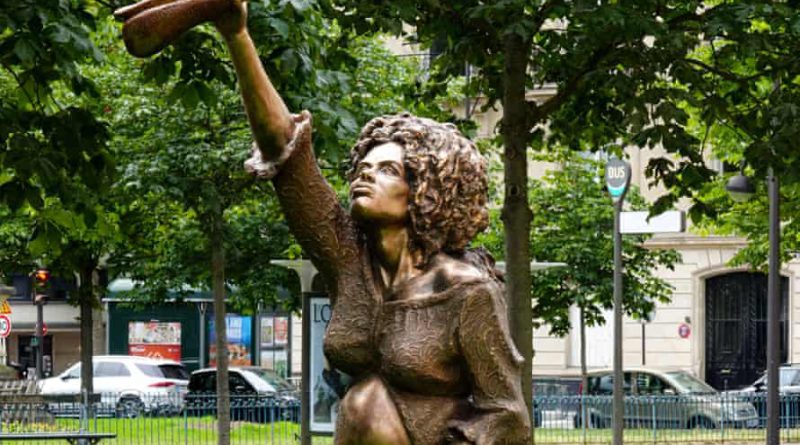
Scholars have also revisited the life of Solitude, a woman of mixed African and European heritage from Guadeloupe who joined resistance against French forces after Napoleon Bonaparte restored slavery in French colonies in 1802. Historical accounts state that Solitude, who was pregnant during the uprising, was executed after giving birth. Her story has since become an important symbol in French public memory, including through commemorative monuments recognising resistance to slavery.
In Jamaica, historians continue to study the leadership of Nanny of the Maroons, who is regarded as one of the principal figures in the struggle against British colonial rule. Oral traditions and historical records describe her role in organising Maroon communities and resisting military campaigns during the eighteenth century. In Barbados, researchers have similarly examined the contributions of Nanny Grigg, who participated in planning the 1816 rebellion commonly associated with Bussa’s Revolt, one of the largest uprisings against slavery in the British Caribbean.
According to historians, women often occupied positions that enabled them to gather information unavailable to others. Many worked inside colonial households, where they could observe administrative activities, communications and daily routines. Researchers argue that this access sometimes allowed women to pass intelligence to resistance movements, making them important participants in broader campaigns against enslavement despite receiving comparatively limited attention in historical narratives.
The expanding field of Black women’s history has been supported by decades of research from historians including Hilary Beckles, Barbara Bush, Verene Shepherd and Stella Dadzie, whose work has explored slavery, colonial societies and the experiences of women across the African diaspora. Their scholarship has contributed to a growing body of literature examining gender alongside race, labour and empire.
Even with this progress, historians say significant gaps remain. Researchers note that relatively few Black women have historically held positions enabling them to conduct archival research or shape mainstream historical interpretation. Institutional barriers within higher education, unequal access to research opportunities and the historical underrepresentation of minority scholars have all influenced whose perspectives became part of the academic record.
Several scholars argue that assumptions about objectivity have, at times, discouraged Black women from entering fields directly connected to their own histories. They say concerns that personal background could affect scholarly neutrality have not always been applied consistently across academic disciplines. As universities diversify their faculties and doctoral programmes, researchers expect broader participation in documenting subjects that have historically received limited attention.
Academic institutions in Europe, North America, Africa and the Caribbean have also expanded collaborative projects examining slavery and colonialism through digital archives, archaeological evidence and newly accessible historical records. These initiatives are enabling researchers to compare sources across countries while bringing together perspectives from multiple disciplines, including history, anthropology and sociology.
Historians say the continued development of this field is likely to depend on sustained archival research, greater international collaboration and increased participation by scholars from historically underrepresented communities. As new evidence emerges and previously overlooked records are examined, researchers expect the historical understanding of Black women’s experiences during slavery and colonial rule to become more detailed and more representative of the societies in which they lived.