Syria Signals Openness to Talks With Hezbollah During Beirut Visit
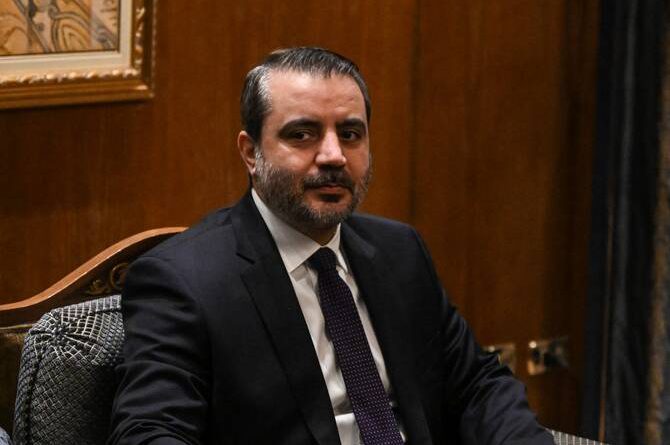
BEIRUT-Syrian Foreign Minister Asaad Al-Shibani said during a visit to Beirut on Thursday that Damascus was open to meeting the Iran-backed Lebanese group Hezbollah if doing so served national interests, according to Lebanon’s state news agency, as Syria seeks to navigate a shifting regional landscape following years of conflict.
Al-Shibani made the remarks during his first official visit to Lebanon since U.S. President Donald Trump publicly suggested that Syrian forces could play a role in confronting Hezbollah inside Lebanon. The minister held talks with Lebanese President Joseph Aoun and Parliament Speaker Nabih Berri, a political ally of Hezbollah.
According to Lebanon’s state news agency, Al-Shibani said the “Hezbollah file” was not discussed during his meetings with Lebanese officials. He added, however, that Syria would be prepared to meet the group if circumstances and national interests required, although the agency did not provide further details.
A statement issued by the Lebanese presidency said Aoun and Syrian President Ahmed Al-Sharaa shared the objective of preserving stability in both neighboring countries. According to the statement, Al-Sharaa assured the Lebanese president that Syria would not interfere in Lebanon’s internal political affairs.
Relations between Syria’s current leadership and Hezbollah have undergone a significant transformation since the fall of former President Bashar Assad in 2024. The former rebel factions now governing Syria fought Hezbollah for years while the Lebanese group deployed fighters in support of Assad’s government during Syria’s civil war.
Since assuming power, Al-Sharaa’s administration has sought to balance regional relationships while focusing on rebuilding a country devastated by more than a decade of conflict. Syria has also largely remained outside the broader confrontation involving the United States, Israel and Iran.
Last month, Trump said he had discussed Hezbollah with Al-Sharaa, suggesting Israel should allow Syrian forces to confront the Lebanese armed group instead. The remarks came after Trump criticized Israel over civilian casualties in Lebanon during its conflict with Hezbollah.
Al-Sharaa subsequently rejected speculation that Syrian troops could enter Lebanon, describing reports of any planned Syrian military deployment as unfounded, according to Syrian state media.
Reuters reported in March that the United States had encouraged Syria to consider deploying forces to eastern Lebanon to assist efforts aimed at disarming Hezbollah. However, Damascus was said to be reluctant because of concerns that such a move could draw Syria into a wider regional conflict and inflame sectarian tensions in both countries.
Trump’s special envoy to Syria, Tom Barrack, later dismissed reports that Washington had urged Damascus to send troops into Lebanon, calling those claims false and inaccurate.
Syria maintained a dominant political and military presence in Lebanon for nearly three decades after deploying troops during Lebanon’s 1975-1990 civil war. Syrian forces remained in the country until 2005, when they withdrew following widespread domestic and international pressure after the assassination of former Lebanese Prime Minister Rafik Hariri.
Any renewed Syrian military involvement in Lebanon would carry significant political and sectarian sensitivities, given the complex religious composition of both countries and the legacy of Syria’s previous role in Lebanese affairs.