
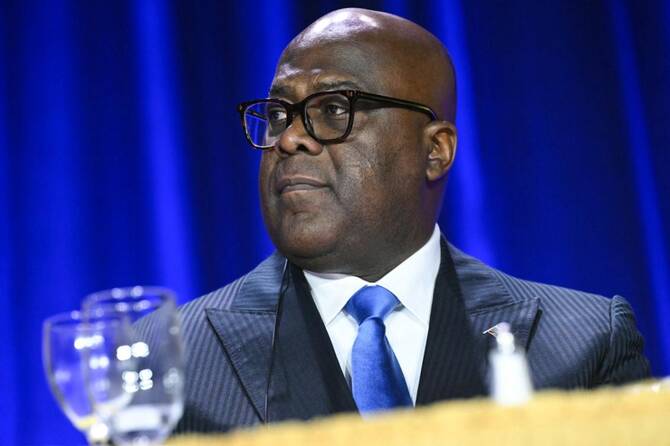
Tshisekedi Moves Toward Referendum Path That Could Extend Rule in DR Congo
Kinhasa– Democratic Republic of Congo President Felix Tshisekedi is moving closer to a constitutional reform process that could allow him to remain in office beyond the end of his second and final term, setting the stage for a political confrontation with opposition groups that accuse him of undermining democratic safeguards.
Tshisekedi, 63, is scheduled to complete his second five-year mandate in December 2028. Under the current constitution, presidents are limited to two terms. However, a recently approved bill establishing procedures for national referendums could provide a legal mechanism for constitutional amendments, including potential changes to presidential term limits.
The legislation has cleared both chambers of parliament, where Tshisekedi’s ruling coalition holds a strong majority, and now awaits presidential approval.
Speaking at a recent news conference in Kinshasa, Tshisekedi said he was not actively seeking a third term but indicated he would be open to continuing in office if supported by voters.
“I didn’t seek a third term, but if the people want me to have a third term, I will accept,” Tshisekedi said, adding that any constitutional revision would require consultation with the Congolese public through a referendum.
The prospect of constitutional reform has generated growing political tensions in the vast Central African nation, where previous attempts by leaders to extend their rule have sparked unrest and international criticism.
Political analyst Ithiel Batumike of the Ebuteli research institute said the referendum legislation represented a significant step toward constitutional change and warned that opponents would need sustained pressure to block the initiative.
“Without sufficient pressure, those in power have no intention of stopping their plan to change the constitution,” Batumike said.
Opposition leaders argue that altering presidential term limits would weaken democratic institutions and reverse constitutional protections designed to ensure peaceful transfers of power.
Earlier this month, security forces and supporters of the ruling coalition clashed with demonstrators protesting the referendum bill in Kinshasa. Human rights organizations reported fatalities and injuries during the unrest, while authorities provided lower casualty figures and denied allegations of excessive force.
Martin Fayulu, a prominent opposition figure and former presidential candidate, accused Tshisekedi of violating the principles he pledged to uphold when taking office.
Another opposition leader, Delly Sesanga, warned that reopening debate on the constitution could threaten political stability at a time when the country faces significant security challenges.
The controversy is unfolding as government forces continue to confront the Rwanda-backed M23 rebel movement in eastern Congo. The insurgency has captured strategic urban centers and displaced large numbers of civilians, creating one of the country’s most serious security crises in years.
Government officials have repeatedly argued that ongoing conflict in the east could complicate preparations for future national elections. Political observers note that delaying elections because of security concerns has historically been used by some African leaders as an alternative means of extending time in office when constitutional reforms encounter resistance.
The issue carries particular historical significance in Congo, where former President Joseph Kabila abandoned efforts to prolong his rule after widespread protests and international pressure erupted over proposed electoral changes in 2015.
At the time, Tshisekedi, then an opposition leader, publicly criticized attempts to extend presidential tenure and called for respect for democratic processes.
With the referendum bill awaiting presidential approval and opposition groups planning further demonstrations, the debate over constitutional reform is likely to become a defining issue in Congolese politics ahead of the 2028 election cycle.