
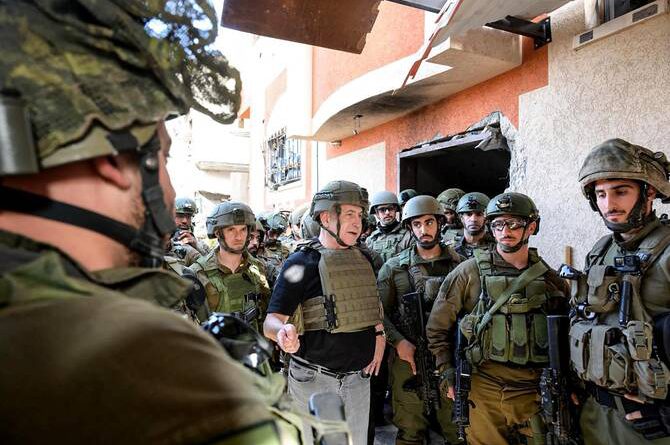
Netanyahu Pushes Defense Self-Reliance as Israel Seeks to Reduce Foreign Arms Dependence
Jerusalem- Israeli Prime Minister Benjamin Netanyahu said on Tuesday that Israel must expand its domestic defense manufacturing capabilities and reduce reliance on foreign weapons suppliers, signaling a strategic shift toward greater military self-sufficiency amid continuing regional security challenges.
Speaking to participants in a reserve combat officers’ training course at Kibbutz Migdal Oz in the occupied West Bank region of Gush Etzion, Netanyahu emphasized that Israel’s long-term security would depend on maintaining an independent defense industrial base while continuing to value support from key allies.
“I deeply appreciate the support we have received, and which I have also brought over the years, from our American friends,” Netanyahu said. “But today I say: We need our own independent armaments network. We must manufacture our own armaments.”
The remarks come as Israel continues to reassess its security and defense requirements following a period of heightened regional conflict involving Iran and Tehran-backed armed groups across the Middle East.
Netanyahu said Israel had inflicted significant damage on its adversaries but cautioned that broader security challenges remained unresolved.
“Where we will be 30 years from now depends on our strength,” he said, underscoring the need for sustained investment in military production, technological innovation and leadership development within the armed forces.
Israel maintains one of the world’s most advanced defense sectors, producing a wide range of military equipment including missile defense systems, drones, armored vehicles, precision-guided munitions and cybersecurity technologies. However, the country also relies heavily on strategic military cooperation with the United States, which remains its largest defense partner and supplier of advanced weapons systems.
Netanyahu’s comments reflect growing emphasis within Israeli security circles on ensuring uninterrupted access to critical military equipment during periods of conflict, particularly as regional tensions continue to evolve.
The prime minister also highlighted the importance of integrating emerging technologies into future military planning and preparing a new generation of commanders capable of addressing threats across multiple operational fronts.
His remarks came amid ongoing concerns over Iran’s military capabilities and the activities of Tehran-aligned groups operating across the region. Netanyahu reiterated that Israel remains focused on maintaining a qualitative military advantage and preserving its ability to respond independently to security threats.
The speech forms part of a broader national debate over defense preparedness, strategic autonomy and the future direction of Israel’s military-industrial policy as regional security dynamics continue to shift.


