ASEAN Pivots to Russian Energy as Hormuz Disruption Exposes Supply Vulnerabilities
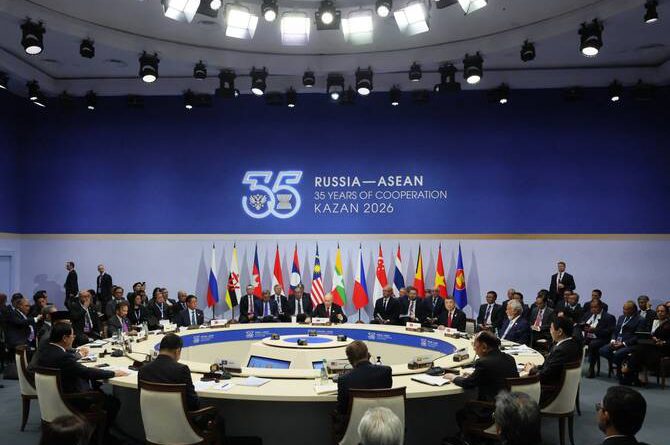
London– Southeast Asian nations agreed with Russia to deepen cooperation in oil, gas and electricity supplies at a summit in Kazan this week, as concerns over energy security intensified following disruptions linked to the conflict involving the United States, Israel and Iran.
Leaders from the Association of Southeast Asian Nations (ASEAN) and Russia concluded their first in-person summit in eight years on Thursday with a commitment to strengthen energy ties, expand trade and investment, and pursue long-term commercial partnerships aimed at diversifying supply sources and reducing exposure to market shocks.
The agreement comes as many Southeast Asian economies grapple with the impact of supply disruptions stemming from the closure of the Strait of Hormuz, a key global energy transit route. The region remains heavily dependent on Middle Eastern crude, with around 60% of Southeast Asia’s crude oil imports originating from the Gulf.
In a joint statement issued after the summit, ASEAN and Russia voiced concern over rising global energy insecurity driven by geopolitical tensions, supply-chain disruptions and market volatility. The two sides also agreed to enhance crisis preparedness, cooperate on energy-transition initiatives and expand engagement in civilian nuclear energy.
Russian President Vladimir Putin, who hosted ASEAN leaders in Kazan, said Moscow was prepared to increase exports of value-added products to Southeast Asian markets, including fertilizers, pharmaceuticals and energy resources.
“Of course, we remain committed to supplying our Asian friends with food products and energy resources, which have been enjoying so much demand,” Putin said at a joint press conference with Philippine President Ferdinand Marcos Jr.
The energy partnership has gained urgency as regional economies face higher fuel costs and supply constraints. The Philippines, for example, imports more than 90% of its crude oil requirements from Gulf producers, leaving it particularly exposed to disruptions in Middle Eastern supply routes.
Indonesian Foreign Minister Sugiono said ASEAN viewed Russia as an important partner in strengthening regional energy resilience and broadening access to alternative sources of supply.
“We seek cooperation that diversifies our sources, strengthens our supply chains, and shields our region from external shocks,” Sugiono told the summit’s plenary session.
Analysts said Russia’s role as a major energy exporter could become increasingly attractive for Southeast Asian governments seeking to mitigate risks associated with geopolitical instability in traditional supply regions.
Chester Calabaza, founding president of the Manila-based International Development and Security Cooperation think tank, said the recent disruption to Middle Eastern energy flows had increased interest in Russian supplies among ASEAN economies pursuing broader energy-security strategies.
Russia’s outreach to ASEAN comes as Moscow seeks to deepen economic engagement with Asia and expand markets for its energy exports, while Southeast Asian governments look to diversify procurement channels amid heightened uncertainty in global energy markets.