Hormuz Shock Drives Gulf States Toward New Energy Corridors and Strategic Realignment
London-The disruption of shipping through the Strait of Hormuz during the recent Iran conflict is accelerating efforts by Gulf energy producers to develop alternative export routes, a shift that could reshape regional economic strategies, infrastructure investment and geopolitical alliances for decades, according to a Reuters analysis by columnist Ron Bousso.
The conflict exposed the vulnerability of Middle Eastern energy exporters to disruptions in one of the world’s most important maritime chokepoints. The Strait of Hormuz, through which a significant share of global oil and liquefied natural gas shipments passes, became the focal point of market instability after Iran imposed a blockade that disrupted energy flows across the Gulf.
The closure stranded roughly one-fifth of global oil and LNG supplies, forcing producers to curtail approximately 11 million barrels per day of oil output while disrupting refinery operations and liquefied natural gas facilities throughout the region.
Although Washington and Tehran have since agreed to pursue negotiations toward a permanent peace arrangement, energy producers and policymakers are increasingly treating future disruptions as a recurring strategic risk rather than a remote possibility.
As a result, Gulf governments are prioritizing investments in pipelines, export terminals and overseas assets to reduce dependence on Hormuz and strengthen resilience against future crises.
Saudi Arabia is widely viewed as the region’s strongest example of successful diversification. Long before the recent conflict, state-owned Saudi Aramco developed a 1,200-kilometer pipeline linking oil fields in the Gulf to the Red Sea port of Yanbu. The infrastructure enabled the kingdom to redirect a substantial portion of its exports away from Hormuz during the crisis.
The economic benefits of that strategy became evident as Saudi Arabia experienced a comparatively limited impact from the disruption. According to International Monetary Fund projections cited in the analysis, the Saudi economy is expected to grow by 3.1 percent in 2026, representing a relatively modest downgrade from pre-war forecasts.
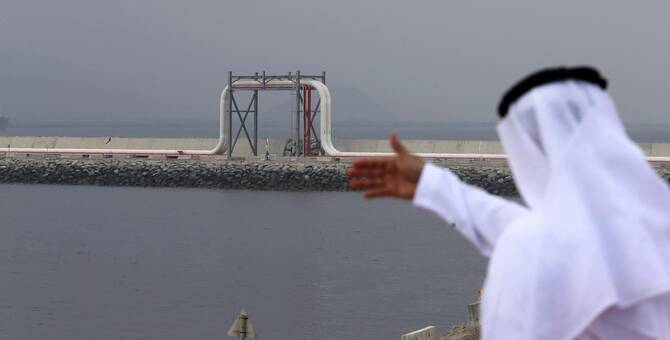
The United Arab Emirates also benefited from existing infrastructure. The country continued exporting significant volumes of crude through the Fujairah terminal on the Gulf of Oman, despite disruptions caused by military activity. Abu Dhabi is now accelerating plans to expand export capacity through a second pipeline to Fujairah, with completion targeted for 2027.
Iraq faces a more complicated challenge because much of its production is concentrated in the south and remains heavily dependent on Gulf shipping routes. Iraqi authorities and energy companies are examining possibilities for expanding northern export corridors through Turkiye and Syria, though political instability and security concerns continue to complicate such plans.
The situation is particularly difficult for Qatar and Kuwait, both of which lack substantial alternative export routes outside the Strait of Hormuz.
For Qatar, one of the world’s largest exporters of liquefied natural gas, bypassing Hormuz would likely require cooperation with neighboring states through pipeline networks crossing the United Arab Emirates, Oman or Saudi Arabia. Such projects would involve major financial investments and could increase Doha’s dependence on regional partners, introducing new strategic considerations.
Kuwait faces a similar predicament, with future diversification efforts likely to require deeper energy integration with Saudi Arabia and potentially broader regional infrastructure cooperation.
Beyond pipeline development, Gulf energy producers are increasingly pursuing geographic diversification through overseas investments. National energy companies have expanded portfolios across international oil, gas, refining, storage and renewable energy projects to create revenue streams less exposed to regional geopolitical risks.
Companies including QatarEnergy and Abu Dhabi National Oil Company have already established significant international footprints, and analysts expect such investments to accelerate as governments seek greater protection from future disruptions in Gulf shipping lanes.
The shift reflects a broader reassessment of energy security across the region. Infrastructure once viewed as supplementary is increasingly being treated as essential, while export diversification has moved from a long-term strategic objective to an immediate economic priority.
As Gulf producers recover from the effects of the Iran conflict, decisions on pipelines, transport corridors and overseas investments are expected to influence trade patterns, diplomatic relationships and energy markets well beyond the Middle East, redefining regional economic architecture in the years ahead.