Weaving Identity: How Namza Couture Is Reimagining Ladakh’s Textile Heritage for Contemporary Fashion
“Namza is deeply emotional for me. It represents home, identity and continuity.”
In the growing conversation around heritage-led fashion in India, Namza Couture is carving out a distinct space by placing Ladakh’s textile traditions at the center of contemporary design.
Founded in 2016 by Ladakh-born designers Padma Yangchan and Jigmet Disket, the Leh-based label is seeking to reshape how the region’s cultural identity is understood within the broader fashion landscape.
For the founders, the brand emerged from a desire to challenge limited perceptions of Ladakhi dress, which they say is often viewed as costume rather than as part of a sophisticated textile and design tradition shaped by geography, trade and community knowledge.
“Namza is deeply emotional for me. It represents home, identity and continuity,” Yangchan said, describing the label as an extension of lived experience rather than a purely commercial venture.
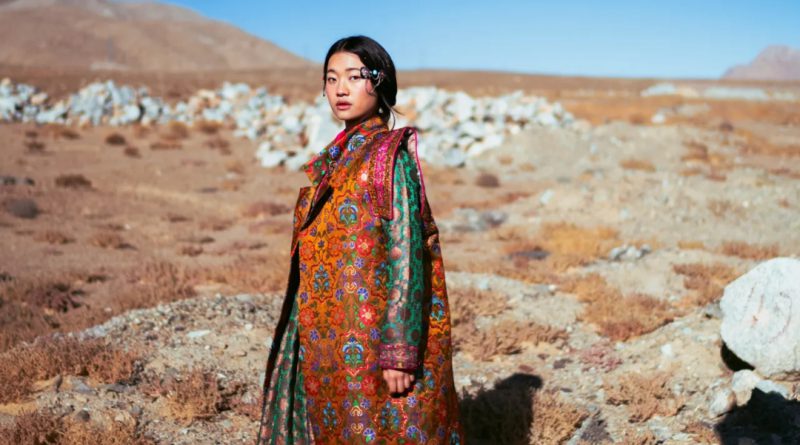
The brand’s approach is rooted in preserving local material traditions while adapting them for contemporary audiences. Rather than reproducing historical garments unchanged, Namza reinterprets regional forms through modern tailoring, proportion and construction, creating pieces that maintain cultural references while functioning within current fashion contexts.
Central to the label’s work is its use of indigenous fibres sourced from Ladakh’s high-altitude environment. These include nambu, a traditional sheep wool widely associated with the region, as well as spuruk from Zanskar.
The brand also incorporates yak wool and camel wool obtained from the Changthang plateau, an area known for its pastoral communities and longstanding textile traditions.Production remains closely connected to local artisans and weaving communities.
The designers work directly with craftspeople who possess generations of knowledge in spinning, dyeing and weaving, creating a supply chain that remains embedded within the region rather than outsourcing production elsewhere.Pashmina continues to occupy an important place in the brand’s collections, reflecting its historical significance in Himalayan textile culture.
Silk brocades are also frequently incorporated, referencing Ladakh’s position along historic trade networks linked to the Silk Route, through which textiles, materials and artistic influences moved across Central and South Asia for centuries.The influence of this layered history can be seen throughout Namza’s design vocabulary.
Traditional garments such as the goncha and mogos serve as recurring points of inspiration, although they are reinterpreted rather than replicated. The designers focus on adapting silhouettes and proportions to contemporary contexts while retaining identifiable elements of regional dress.Decorative details further reinforce these connections.
Collections frequently feature stylized crane motifs, floral embroidery traditions associated with the Brokpa community and symbolic patterns influenced by Buddhist artistic traditions. Indigenous techniques such as tigma, a traditional tie-dye process, are employed alongside carefully positioned embroidery that allows individual garments to convey distinct cultural narratives.
According to Yangchan, one of the most significant challenges has been translating Ladakh’s cultural depth into a language that resonates beyond the region without compromising authenticity.“Ladakh is often seen in a very limited way, either as something purely traditional or purely touristic.
Translating its depth into something that resonates globally while still being true to its roots has taken time. Also, working with handmade processes means scalability is always a challenge,” she said.The challenge reflects a broader issue facing many heritage-focused fashion labels.
While demand for handcrafted and culturally rooted products continues to grow, scaling production remains difficult when garments rely on specialized techniques and artisan-led processes that cannot easily be industrialized.For Namza, maintaining production within Ladakh remains a core component of its identity.
The label continues to rely on local handloom systems and artisan networks, ensuring that traditional knowledge remains part of the production process rather than merely serving as inspiration for finished products.This model also creates economic opportunities within communities where textile skills have historically been passed through generations.
By integrating traditional materials and techniques into contemporary fashion markets, the brand contributes to sustaining practices that might otherwise face pressures from changing consumer preferences and industrial manufacturing.Beyond clothing, Namza’s work reflects a broader cultural project.
The label presents Ladakh not as a static heritage destination but as a living and evolving cultural landscape capable of engaging with global audiences on its own terms.As interest in regionally rooted fashion continues to expand, Namza Couture offers an example of how contemporary design can serve as a vehicle for cultural storytelling.
Through textiles, craftsmanship and reinterpretation of traditional forms, the brand is positioning Ladakh’s design heritage within national and international fashion conversations while remaining firmly connected to the communities and landscapes from which it emerged.