Families Allege Medical Neglect and Retaliation as Hunger Strike Intensifies at New Jersey ICE Detention Center
“
“They can’t do anything—it’s like they’re kidnapped there. We, their family members, want to help, but it’s not in our hands.”
Relatives of immigrants detained at the Delaney Hall immigration detention facility in New Jersey say they are increasingly concerned about the wellbeing of their loved ones as a hunger and labor strike over alleged conditions inside the center enters its third week, drawing protests, political scrutiny and competing claims from detainees, government officials and the facility’s private operator.
At the center of those concerns is Elder Guerra, a Guatemalan immigrant who has been held at Delaney Hall for nearly five months while contesting his deportation case. According to a family member who spoke on condition of anonymity for fear of retaliation, Guerra suffered a serious fall in mid-May while showering inside the facility.
The relative said Guerra slipped, struck the back of his head and lost consciousness before experiencing a seizure. Other detainees reportedly urged guards to seek emergency medical assistance before Guerra was transported to a hospital.
He was later returned to Delaney Hall and placed in a medical isolation unit.Nearly three weeks after the incident, the relative said Guerra continues to experience severe headaches, dizziness, sensitivity to light, fatigue and hearing problems in one ear.”He needs medical attention.
He’s not in an adequate place to recover,” the relative said.The case has become one of several cited by detainees, advocates and family members who accuse authorities and facility operators of failing to provide adequate medical care and humane living conditions at Delaney Hall, a detention center operated by the private prison company GEO Group under contract with federal immigration authorities.
The facility has become the focus of mounting controversy since detainees launched a hunger and labor strike on May 22. Participants say the action was prompted by concerns over medical treatment, food quality, sanitation, drinking water and living conditions.
According to a letter released by detainees on May 31, those held inside the facility described what they called conditions “not fit for human beings over such a long period of time.”The letter alleged medical neglect, contaminated drinking water, expired food, unusable bathrooms and poorly maintained ventilation systems that detainees claim have contributed to frequent illness.
The detainees also demanded faster processing of immigration cases, the release of elderly and sick detainees, a meeting with New Jersey Governor Mikie Sherrill and an end to what they described as pressure from immigration officials to sign deportation documents.
The Department of Homeland Security did not respond to detailed requests for comment cited in the report.As attention surrounding the facility has intensified, demonstrations outside Delaney Hall have expanded.
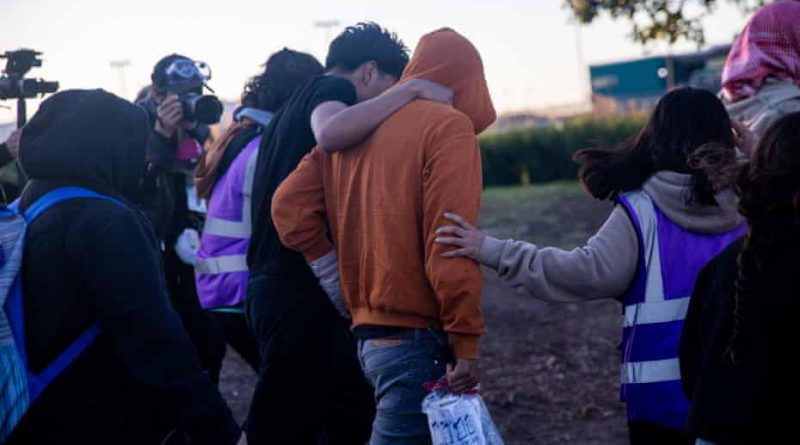
Protesters have accused federal authorities and facility staff of mistreating detainees, while law enforcement agencies have responded to demonstrations with crowd-control measures that have included pepper spray, tear gas, arrests and the use of Tasers, according to accounts from participants and observers.
Family members arriving for visits described emotional encounters with relatives held inside the detention center.Guerra’s relative said his detained family member repeatedly pleaded for assistance during a recent visit following the accident.”He kept telling me, ‘Help me.
I need to leave here,'” the relative said.The emotional strain has extended beyond those detained. Family members interviewed outside the facility described anxiety, frustration and uncertainty as they navigate changing visitation rules while attempting to support relatives facing immigration proceedings.
Christopher Castro, who traveled with his mother from Long Island to visit his father, said detainees were increasingly seeking legal avenues to secure release.”My dad told me that a lot of people inside are pushing their lawyers to get them out,” Castro said after a visit.
Many families expressed concern that participation in the hunger strike could result in retaliation. Several detainees have reportedly chosen not to join the protest because they fear transfers, disciplinary measures or adverse effects on their immigration cases.
Those concerns have been amplified by allegations contained in detainees’ public statements.In their latest letter, strike participants claimed that since the protest began they had faced intimidation, discrimination and threats from both facility staff and immigration authorities.
Detainees alleged they had been threatened with deportation, transfer to other detention centers and placement in disciplinary housing units.GEO Group rejected those allegations.”GEO strongly refutes these allegations,” a company spokesperson said, stating that the facility provides around-the-clock medical care, legal and family visitation, translation services, religious accommodations and meals approved by dietitians.
The company referred questions regarding individual detainee cases to federal authorities.The dispute over conditions at Delaney Hall has unfolded amid broader national debate over immigration enforcement policies and detention practices.Federal officials have frequently described those arrested and detained by Immigration and Customs Enforcement as serious offenders.
However, a recent review of ICE data conducted by Syracuse University researcher Austin Kocher found that the overwhelming majority of detainees held at Delaney Hall had no criminal convictions.According to Kocher’s analysis of mid-March detention data, approximately 88% of detainees held at the facility had no criminal conviction, while more than 70% had no criminal history at all.
Among those with convictions, many were associated with relatively low-level offenses.The findings have become a focal point for advocates who argue that public portrayals of immigration detainees often differ from available government data.
The controversy has also drawn the attention of elected officials. Oversight visits conducted by members of Congress and state officials have reportedly identified conditions consistent with complaints raised by detainees and their advocates.
One of the most visible activists connected to the protests is Gabriela Soto, whose husband Martin was detained at Delaney Hall before being transferred to another ICE facility. Soto said visits to the detention center motivated her to become involved in organizing demonstrations.”Once I started going to the visits and started seeing these people tell their stories, it made me so angry that they don’t have a voice,” she said.
Soto cited reports from detainees alleging spoiled food and unsanitary conditions as key reasons for her activism.Federal officials have repeatedly rejected allegations that detention conditions at Delaney Hall are inadequate.
The Department of Homeland Security has denied claims that detainees are being held in what it describes as “sub-prime” conditions and has similarly disputed comparable allegations involving other immigration detention facilities.Delaney Hall occupies a significant position within the federal detention system.
Operated by GEO Group, the largest private prison company in the United States, the facility is covered by a contract valued at approximately $1 billion over 15 years.For many families, however, the political debate remains secondary to concerns about loved ones inside the facility.
Guerra’s relative said he has hesitated to return for another visit after learning that visitors were being asked to provide identifying information before entering the center. He remains focused on securing medical treatment and legal assistance for his detained family member.”What is happening is inhumane,” he said. “They should have mercy. They’re human beings.”