Iran Strikes Kuwait, Bahrain as U.S. Launches Retaliatory Action
Dubai — Iran launched missile and drone attacks targeting U.S. military assets in Kuwait and Bahrain on Wednesday, prompting U.S. retaliatory strikes on Iran’s Qeshm Island, as tensions escalated despite ongoing diplomatic efforts aimed at ending months of conflict across the Gulf.
Kuwait said one person was killed and several others were injured after Iranian attacks struck civilian and vital infrastructure, including Kuwait International Airport. The foreign ministry said the assault caused damage to key facilities and diplomatic missions, while air traffic was temporarily suspended before operations resumed later from Terminal 4 following safety assessments.
Iran’s Islamic Revolutionary Guard Corps (IRGC) said it had targeted the headquarters of the U.S. Fifth Fleet in Bahrain, an airbase and military helicopters in a Gulf state, describing the operation as retaliation for what it called a U.S. strike on a communications tower south of Qeshm Island.
The U.S. military rejected Iran’s account, saying its forces intercepted multiple Iranian missiles and drones launched toward Kuwait and Bahrain before conducting strikes on Qeshm Island. U.S. Central Command said no Iranian projectiles reached their intended targets.
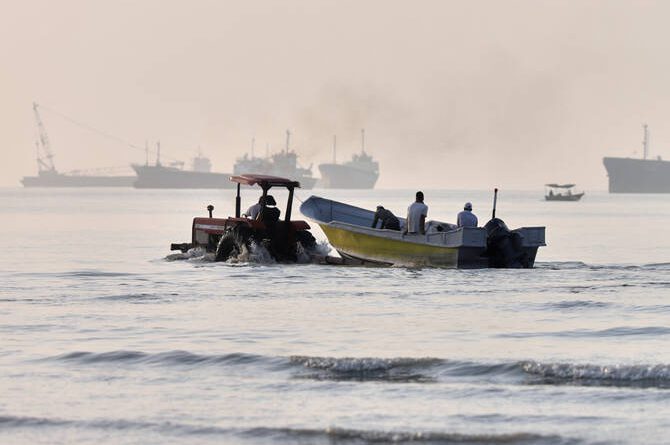
Iranian media reported explosions near Qeshm Island, located close to the strategic Strait of Hormuz, while Tehran also accused U.S. forces of striking an Iranian tanker near the waterway. The IRGC said it subsequently targeted a vessel identified as Panaya with missiles.
The renewed hostilities followed reports from Iranian media that communication with international mediators over extending a ceasefire framework had stalled. However, U.S. President Donald Trump dismissed suggestions that talks had ceased, saying discussions with Tehran had continued in recent days.
Trump also reiterated that negotiations remained active and urged Iran to reach an agreement, while Secretary of State Marco Rubio told lawmakers that any sanctions relief would depend on Tehran abandoning its nuclear activities.The confrontation comes amid a broader regional conflict that began in late February following U.S. and Israeli strikes on Iran.
Although Washington and Tehran announced a tentative framework last week aimed at ending the war, no final agreement has been reached.The conflict has increasingly intersected with fighting between Israel and Lebanon’s Hezbollah movement.
Iranian officials have linked any lasting truce to a reduction in hostilities in Lebanon, while the United States and Israel maintain the two issues are separate.Iran continues to seek sanctions relief, access to frozen oil revenues and eased restrictions affecting its energy exports, while Washington says preventing Iran from obtaining nuclear weapons remains its primary objective.
The latest military exchanges have further heightened concerns over security in the Strait of Hormuz, a critical energy corridor that previously handled roughly one-fifth of global oil and liquefied natural gas shipments, with disruptions continuing to affect shipping, trade and humanitarian supply chains across multiple regions.