Ceasefire Erosion Exposes Fragile Truces Across Middle East Conflicts
Ramallah- Ceasefires declared in Gaza, Lebanon and between the United States and Iran are increasingly being tested by continued military operations, raising questions about the durability of agreements that were intended to halt some of the region’s most consequential conflicts.
Despite formal ceasefire arrangements remaining in place, fighting has persisted across multiple fronts, with Israeli military operations expanding in Gaza and southern Lebanon and U.S. and Iranian forces continuing to exchange fire amid efforts to negotiate more lasting settlements.
In Gaza, an October ceasefire brokered with strong backing from U.S. President Donald Trump ended two years of full-scale warfare and secured the release of remaining hostages seized during Hamas’ Oct. 7, 2023 attack on Israel. However, key provisions aimed at establishing a postwar framework have yet to be implemented.
Israeli forces have continued military operations in the territory, capturing additional areas and targeting Hamas leaders. Israel now controls roughly 60% of Gaza, up from about half when the ceasefire was agreed, according to figures cited by officials. Prime Minister Benjamin Netanyahu has said Israel intends to expand its hold further.The United States and Israel have attributed the stalled implementation of the ceasefire to Hamas’ refusal to disarm.
Hamas, in turn, has accused Israel of repeatedly violating the agreement through continued airstrikes and military operations. Local health authorities say at least 932 Palestinians have been killed since the ceasefire took effect.Humanitarian conditions in Gaza remain severe, with hundreds of thousands of displaced Palestinians continuing to live in temporary camps while reconstruction efforts remain stalled and plans for a new Palestinian governing structure unresolved.
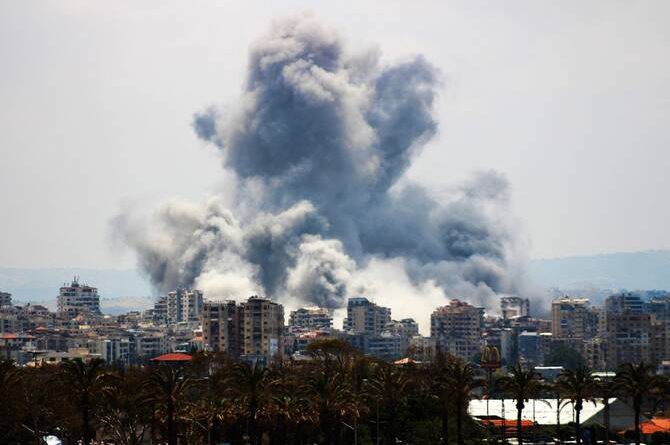
In Lebanon, an April ceasefire has similarly failed to end hostilities between Israel and the Iran-backed Hezbollah movement. Fighting intensified over the weekend when Israeli troops raised their flag over Beaufort Castle in southern Lebanon, marking Israel’s deepest advance into Lebanese territory since the end of its 1982-2000 occupation.
Hezbollah responded with rocket attacks reaching deeper into northern Israel, underscoring the limited impact of efforts to de-escalate the conflict. The latest exchanges came despite Trump stating that both sides had again agreed to reduce tensions.Israel has said it will continue military operations until it no longer faces threats from Hezbollah rocket and drone attacks.
Lebanese efforts to address Hezbollah’s military status have made little visible progress as clashes continue along the border.The conflict in Lebanon has become increasingly linked to wider regional diplomacy. Iranian officials have demanded a ceasefire in Lebanon as part of any broader understanding with Washington.
Meanwhile, a separate ceasefire reached in early April among the United States, Iran and Israel has also come under strain. The agreement was designed to halt regional hostilities and facilitate the reopening of the Strait of Hormuz, a critical global shipping route whose disruption triggered sharp increases in energy prices.
Iran initially announced it would reopen the waterway but later reinstated restrictions after the United States imposed a naval blockade on Iranian ports. Washington has called for the unrestricted reopening of the strait and seeks concessions from Tehran regarding its nuclear program, while Iran has demanded sanctions relief, an end to the blockade and guarantees against renewed military action.
Negotiators appeared close to an agreement last week but failed to reach a breakthrough. Trump has repeatedly warned that military action could resume if Iran retains its stockpile of highly enriched uranium, while Iranian officials have said substantive nuclear discussions require a more durable ceasefire.
Military incidents have continued in and around the Strait of Hormuz. On Monday, the United States said it struck Iranian radar and drone facilities after Tehran allegedly downed a U.S. drone over the weekend. Iran subsequently said it launched missiles targeting American personnel in Kuwait, while U.S. officials said the missiles were intercepted.
In a statement posted on X, U.S. Central Command said it would continue protecting American forces while supporting efforts to maintain the ceasefire.
The persistence of military operations across Gaza, Lebanon and the Gulf highlights the growing gap between formal ceasefire agreements and conditions on the ground, where competing security objectives and unresolved political disputes continue to fuel violence.