Toxic Green Algae Crisis in Brittany Raises Fresh Concerns Over Public Health and Intensive Farming
“When they wash ashore and pile up on top of one another, they form a sort of airtight shell, and fermentation takes place inside.”
A series of deaths linked to toxic gas emissions from decomposing green algae along the coast of Brittany has intensified scrutiny of France’s agricultural policies and the environmental consequences of intensive livestock farming in the region.
Investigators and environmental specialists say hydrogen sulphide gas released by rotting seaweed has repeatedly created hazardous conditions along parts of Brittany’s coastline, particularly in shallow bays where large quantities of algae accumulate and decompose in low-oxygen conditions.
The issue regained national attention following the death of Jean-René Auffray, a local jogger who collapsed in 2016 near the Bay of Saint-Brieuc, an area long associated with recurring green algae blooms.
Tests conducted weeks after his death by a specialist military disaster response team found hydrogen sulphide emissions at the site so high that measuring equipment reportedly exceeded its detection limits.
Authorities said the gas levels were comparable to those previously identified in other incidents involving animal deaths linked to decomposing algae, including dead wild boars and a horse that died after exposure near Brittany’s coastal mudflats.
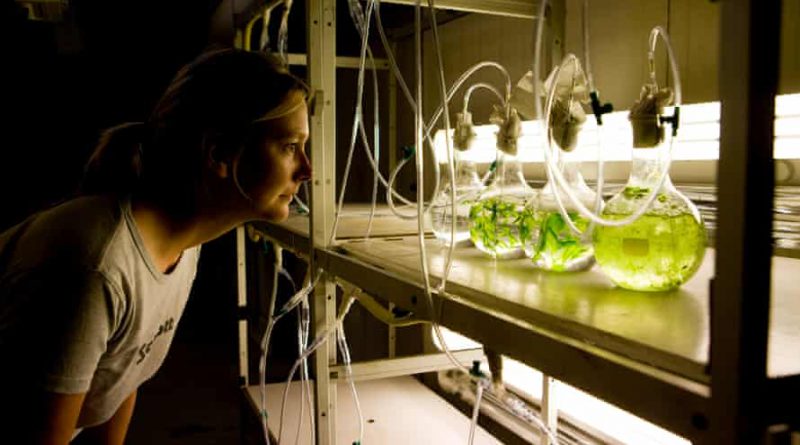
Environmental engineer Clément Daniel, who works at the Algae Technology and Innovation Centre in Brittany, said the dominant species responsible for the blooms is Ulva armoricana, a type of green algae particularly prone to rapid proliferation.
According to Daniel, the algae reproduce through fragmentation, allowing small pieces broken apart by waves to regenerate quickly and spread across shallow coastal bays. Brittany’s geography, including confined coastal inlets with weak water circulation, creates favorable conditions for repeated blooms.
“All seaweed contain sulphur, and when it decomposes in low-oxygen environments, it may release hydrogen sulphide,” Daniel said while describing the decomposition process. He noted that Ulva species become especially dangerous when thick layers accumulate on shorelines and create sealed conditions that trap gases during fermentation.
Hydrogen sulphide is a highly toxic gas recognizable at low concentrations by its characteristic rotten egg odor. Medical experts say prolonged exposure even at relatively low levels may contribute to respiratory problems and fatigue.French authorities generally close beaches when concentrations reach 1 part per million, according to regional safety protocols.
However, toxicologist Pierre Philippe warned that higher concentrations can rapidly become life-threatening.“At 50 ppm, it anaesthetises your sense of smell,” Philippe said, explaining that victims may no longer detect the gas despite continued exposure.
Medical literature indicates exposure above 100 ppm can trigger headaches and respiratory distress, while substantially higher concentrations may lead to severe lung damage, unconsciousness and death.Public safety measures along Brittany’s coastline remain inconsistent despite years of warnings and litigation.
Some beaches display prominent multilingual warning signs identifying dangerous zones, while others rely on smaller municipal notices that can be difficult for visitors to identify or understand.During visits to affected beaches near Saint-Brieuc, local residents described continuing frustration over recurring algae invasions and what they view as insufficient government action to address the root causes.
The problem has increasingly been tied to agricultural runoff from Brittany’s large-scale livestock industry, particularly intensive pig and poultry farming. Excess nitrates from manure and fertilizers flow into rivers and coastal waters, creating nutrient-rich conditions that accelerate algae growth.
France has implemented multiple anti-pollution programs over the past decade aimed at reducing nitrate runoff into coastal ecosystems. The current national “seaweed plan,” scheduled to continue through 2027, includes measures such as planting vegetation buffers and woodland strips near waterways to absorb excess nutrients before they reach the sea.
Environmental groups and legal advocates, however, argue those measures have failed to adequately address the scale of the contamination problem.Earlier this year, a court in Rennes ruled that current state measures were insufficient to significantly curb the proliferation of green algae in Brittany.
Environmental advocates say meaningful improvement would likely require structural reductions in intensive livestock production across the region.Lawyer François Lafforgue has represented several families pursuing legal action connected to hydrogen sulphide exposure.
Among them is the family of Thierry Morfoisse, a beach-cleaning worker who died in 2009 after being exposed to toxic gas while removing algae deposits from the coastline.According to Lafforgue, Morfoisse’s blood samples reportedly contained unusually high concentrations of hydrogen sulphide.
However, the samples were stored under standard hospital procedures rather than preserved under specialized toxicological conditions, creating evidentiary complications during legal proceedings.
In January 2026, Morfoisse’s case was referred back to the appeals court to determine whether his employer had adequately informed and protected workers from known hydrogen sulphide risks.
Since earlier deaths and legal challenges, coastal cleanup workers in Brittany have increasingly been equipped with hydrogen sulphide detectors and protective gas masks during algae removal operations.
The environmental consequences have also expanded beyond public health concerns. Recent reports indicate that algae proliferation has spread onto Brittany’s oyster beds, raising fears for shellfish production and the long-term viability of parts of the region’s coastal economy.
Local residents and environmental researchers say recurring blooms have altered public perceptions of some of Brittany’s best-known beaches and estuaries, historically regarded as among France’s most scenic coastal landscapes.
“There is a prevailing fatigue,” said local observer Levain, describing frustration over the repeated return of algae blooms despite years of political debate and environmental planning.
Philippe said the crisis reflects both a public health challenge and a broader ecological decline affecting one of France’s most environmentally sensitive coastlines.
“I love this region,” Philippe said. “But the degradation breaks my heart.”