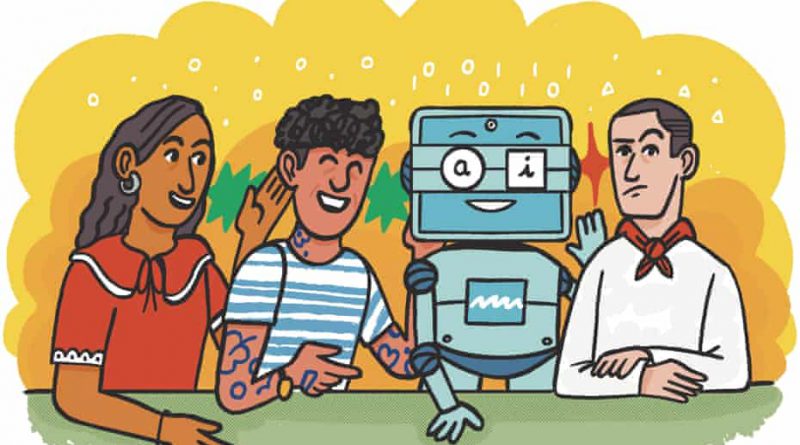
Lost in Translation: Instant Speech Technology Raises Concerns Over Cultural Understanding
“Speaking another language imperfectly can function as a gesture of respect and cultural curiosity that automated translation systems may not replicate.”
As advances in speech translation technology move closer to enabling near-instant multilingual communication, linguists, diplomats and interpreters are raising concerns that the growing reliance on automated translation could weaken cultural understanding traditionally built through language learning and human interaction.
The debate reflects broader questions surrounding the role of language in diplomacy, commerce and social exchange as translation systems become increasingly capable of converting conversations across languages in real time. While the technology promises to reduce communication barriers in international business and travel, some language experts argue that fluency alone does not guarantee cultural comprehension.
Diego Marani, a former interpreter at the European Commission and the Council of the European Union, said multilingual communication historically involved more than the transfer of information. According to Marani, attempts to speak another language, even imperfectly, often created opportunities for cultural curiosity, humour and social bonding that extended beyond literal meaning.
Marani recalled his experience interpreting conversations between Italian and North African engineers during a professional assignment. He described how informal discussions continued beyond formal meetings, often during shared meals and evening conversations. According to his account, some Italian engineers held stereotypical assumptions about Arab societies and wanted to ask their counterparts personal questions about family structures and marriage practices.
Rather than translating the questions directly, Marani said he reframed them in a less confrontational manner by asking about the number of children the North African engineers had. The responses, which ranged from two to five children, generated enthusiastic reactions from the Italian group, who interpreted the answers positively. Marani said both sides left the exchange satisfied, despite the fact that the original question had been altered in translation.
The episode illustrates the discretionary role human interpreters often play in international communication, particularly in situations involving cultural sensitivities, informal dialogue or potential misunderstandings. Professional interpreters in diplomatic and institutional settings frequently balance literal accuracy with context, tone and social dynamics.
Language scholars have long argued that translation involves interpretation shaped by social norms, idiomatic expression and cultural references that cannot always be conveyed directly between languages. Studies in sociolinguistics and intercultural communication have shown that language learning often exposes speakers to broader historical and cultural frameworks associated with the societies in which those languages evolved.
Supporters of advanced translation technologies argue that real-time multilingual systems could expand economic access, reduce communication costs and facilitate international cooperation by allowing people to converse without requiring years of language study. Technology companies developing speech translation tools have increasingly promoted such systems for use in customer service, international business meetings and cross-border collaboration.
The European Union, where 24 official languages are used across institutions, has historically depended on large networks of interpreters and translators to manage multilingual governance. Human interpretation remains central to negotiations and legislative proceedings because meaning in political and diplomatic contexts frequently depends on nuance, tone and phrasing.
Marani said the process of learning another language often functions as a form of social engagement rather than merely a practical skill. He argued that imperfect speech, including mistakes or misunderstandings, can foster interaction and mutual patience between speakers from different backgrounds.
According to Marani, attempts to communicate in another language may also signal respect for another culture. He said language learning historically encouraged people to adapt emotionally and intellectually when encountering unfamiliar customs and perspectives.Researchers in communication studies have similarly noted that multilingual interaction can influence perception and social behaviour.
Academic studies have found that language acquisition frequently exposes learners to different systems of etiquette, humour and social hierarchy that may not be fully captured through direct translation tools.At the same time, automated translation systems continue to improve rapidly in accuracy and accessibility.
Technology firms have invested heavily in speech recognition and multilingual processing systems aimed at reducing delays and errors in live conversations. Such tools are increasingly integrated into smartphones, conferencing platforms and consumer devices.Industry analysts say the commercial appeal of seamless translation lies in its potential to eliminate friction in international interactions.
Businesses operating across multiple markets could reduce dependence on human interpreters for routine communication, while travellers may gain easier access to local services and information abroad.However, critics caution that the efficiency offered by translation systems could gradually reduce incentives for foreign language education.
Some educators and cultural institutions have warned that declining interest in language learning may narrow exposure to foreign literature, history and social traditions.Marani said translation technology may eventually become capable of adapting not only linguistic content but also cultural context and conversational sensitivity.
Even so, he maintained that the experience of struggling to communicate across linguistic boundaries carries social value that extends beyond functional understanding.He said misunderstandings, corrections and moments of uncertainty often become part of the human experience of intercultural exchange, contributing to relationships in ways that highly efficient communication systems may not reproduce.