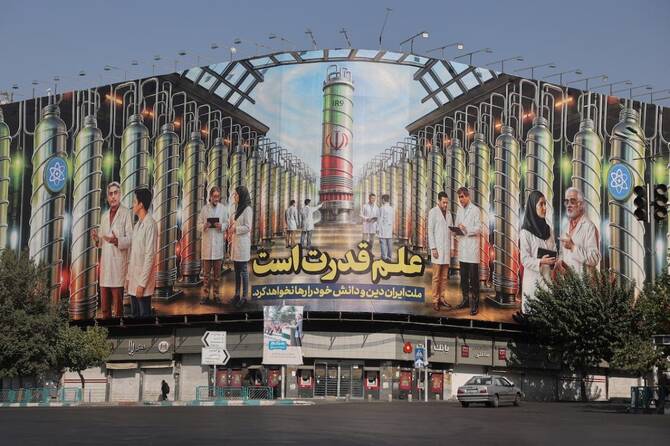
U.S. Intelligence Sees Limited Fresh Setback to Iran Nuclear Timeline
Washington — U.S. intelligence assessments indicate that recent military action has not significantly altered the time Iran would need to produce a nuclear weapon, which remains at up to about one year if it chose to pursue that path, according to three sources familiar with the matter.
The findings suggest that the trajectory of Tehran’s nuclear program has remained broadly unchanged since last summer, despite months of conflict involving the United States and Israel. The war, launched on February 28, has largely targeted conventional military infrastructure, though Israel has struck several nuclear-related facilities.
Analysts say the unchanged timeline reflects both the limited focus of recent U.S. operations on nuclear sites and the continued existence of Iran’s stockpile of highly enriched uranium. Significantly delaying the program would likely require neutralizing or removing this material, they said.Earlier intelligence assessments had concluded that Iran could produce sufficient bomb-grade uranium within three to six months.
Following U.S. strikes last year on key facilities including Natanz, Fordow and Isfahan, that estimate was extended to roughly nine to twelve months.The International Atomic Energy Agency, the U.N. nuclear watchdog, has said Iran’s existing stockpile of highly enriched uranium could be sufficient for multiple weapons if further processed.
However, inspectors have been unable to verify the location of part of this material after oversight activities were disrupted.A fragile truce agreed on April 7 has paused large-scale hostilities, though tensions remain elevated. The conflict has also disrupted shipping through the Strait of Hormuz, a key route for global oil flows, contributing to wider energy market instability.
U.S. officials have consistently said preventing Iran from obtaining a nuclear weapon remains a central objective. Defense Secretary Pete Hegseth has stated that Washington aims to achieve this through a combination of military pressure and negotiations.Experts say assessing the full impact of military operations on Iran’s nuclear capacity remains difficult.
While physical infrastructure has been damaged, knowledge and technical expertise may persist, and some nuclear material is believed to be stored in hardened underground sites beyond the reach of conventional strikes.Iran has long denied seeking nuclear weapons, maintaining that its program is for civilian purposes.
U.S. intelligence agencies and the IAEA assess that Tehran halted an organized weapons development effort in 2003, though concerns remain over its enrichment capabilities and potential breakout capacity.