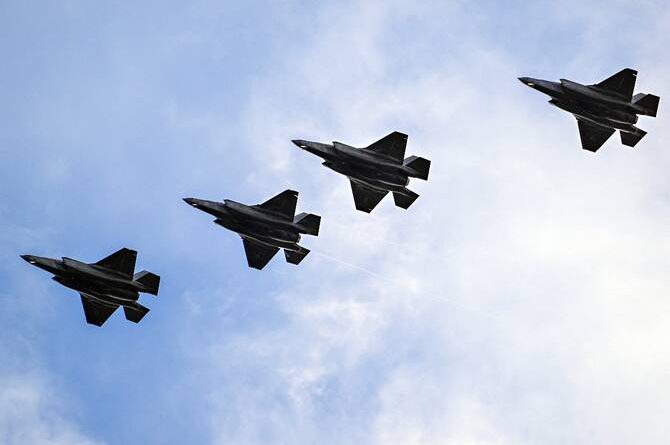
Israel Clears Multi-Billion Dollar Deal for New F-35 and F-15I Fighter Jets
Jerusalem-Israel has given final approval for the purchase of two new combat squadrons of U.S.-made F-35 and F-15IA fighter aircraft from Lockheed Martin and Boeing in a deal worth tens of billions of shekels, the Defense Ministry said on Sunday.
The acquisition includes advanced F-35 Lightning II jets and upgraded F-15IA aircraft, aimed at strengthening Israel’s long-term air superiority and expanding its operational capacity amid heightened regional tensions.
The Defense Ministry said the agreement received final authorization after completing the required approval process, marking one of the country’s largest recent military procurement decisions.
The purchase comes as Israel continues military operations across multiple fronts, including ongoing tensions involving Iran, Hezbollah in Lebanon and regional security threats linked to broader instability in the Middle East.
The F-35, produced by Lockheed Martin, is considered one of the world’s most advanced stealth fighter platforms, designed for precision strike missions, intelligence gathering and electronic warfare.
The F-15IA, based on Boeing’s advanced F-15 platform and customized for Israeli operational needs, is expected to enhance long-range strike capability and payload flexibility.
Defense officials have repeatedly emphasized the need to preserve Israel’s qualitative military edge in the region, particularly as neighboring actors expand missile programs, drone capabilities and air defense systems.The latest procurement also reinforces long-standing strategic defense ties between Israel and the United States, where military aid and defense cooperation remain central pillars of bilateral relations.
Washington has consistently supported Israel’s modernization of its air force through joint defense agreements, foreign military financing and access to advanced weapons systems.The scale of the deal reflects both immediate operational demands and longer-term strategic planning as Israel adapts its force structure to increasingly complex regional security challenges.