
Flood Fears Jeopardize Bangladesh’s Summer Rice Harvest
Dhaka – Heavy pre-monsoon rains and rising upstream water flows from India have swollen rivers across northeastern Bangladesh, threatening major rice-growing regions with flooding during the critical Boro harvest season and raising concerns over food supply and rural incomes, officials said on Wednesday.
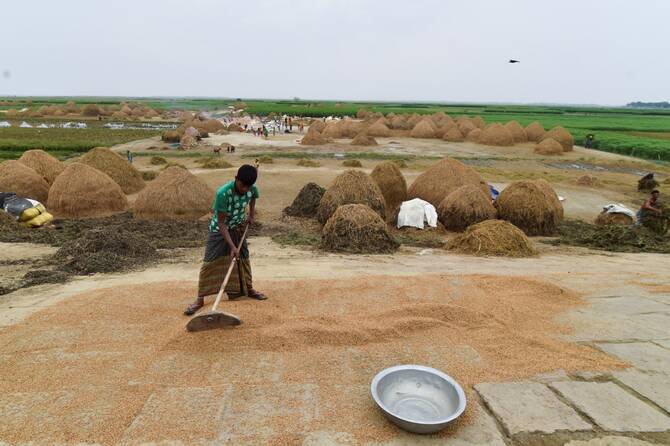
Farmers in the country’s haor wetlands, where much of the summer Boro paddy is cultivated, have been rushing to harvest ripe crops amid relentless rain, thunderstorms and strong winds, with many wading through knee-deep water to salvage partially submerged fields.“We’re trying to save whatever is still standing,” said Mohammad Al Amin, a farmer in Sunamganj district, describing the urgency as floodwaters continued to rise.
Authorities said continuous rainfall, combined with water inflows from India’s Meghalaya and Assam regions, had sharply increased the risk of flash floods in vulnerable districts.Large areas of cropland in Sunamganj, Sylhet, Kishoreganj, Habiganj and Moulvibazar have already gone under water, according to local officials.
In several places, embankments were weakened or overtopped by sudden surges, allowing floodwaters to spill into paddy fields.Agriculture officials warned that even brief submergence at the current stage of crop maturity could significantly reduce yields, threatening both farmer incomes and national food security.
Heavy rainfall has also damaged vegetables and other crops, increasing concerns about supply shortages and possible price pressures in local markets.The Bangladesh Meteorological Department forecast further rainfall in the coming days, while disaster management officials warned that additional upstream flows could worsen flooding across the low-lying haor basin.
Farmers are also facing irrigation disruptions linked to diesel shortages following supply chain strains associated with the Iran conflict in the Middle East, adding to production challenges during the harvest season.
In urban areas, heavy rain has caused widespread waterlogging in the capital Dhaka and the port city of Chittagong, flooding roads, slowing traffic and straining already fragile drainage systems.Bangladesh, one of the world’s most climate-vulnerable countries, faces frequent river flooding and extreme weather events.
A 2015 World Bank Institute analysis estimated that around 3.5 million people are exposed to annual river floods, with scientists warning that climate change is intensifying such risks.
The country is the world’s third-largest rice producer and consumes most of its output domestically, but often turns to imports when floods or droughts disrupt supply.
