High-Stakes Islamabad Diplomacy as U.S. Envoys Push Fragile Iran Ceasefire Forward
Islamabad — U.S. envoys Steve Witkoff and Jared Kushner arrived in Pakistan on Saturday to revive peace negotiations with Iran amid a fragile ceasefire, as uncertainty persisted over whether Tehran would agree to direct talks with Washington after weeks of conflict that rattled global energy markets and disrupted shipping through the Strait of Hormuz.
The White House said Witkoff and Kushner would hold an “in-person conversation” with Iranian representatives in Islamabad, but Iranian state media reported that direct negotiations were not planned and that Pakistan would instead act as an intermediary.
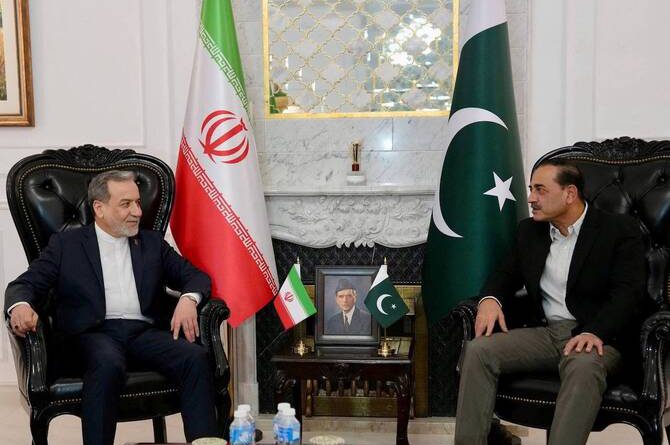
Iranian Foreign Minister Abbas Araghchi, who arrived in Islamabad on Friday, delivered Tehran’s negotiating demands and concerns over U.S. conditions to Pakistani officials, a Pakistani source involved in the discussions told Reuters.
Pakistan’s Foreign Ministry said Araghchi’s visit focused on “ongoing efforts for regional peace and stability,” without explicitly confirming face-to-face engagement between Iranian and American officials.
Security across Islamabad was tightened sharply before the talks, with major roads sealed, military checkpoints reinforced, and troops deployed around the capital’s airport and heavily fortified Red Zone.Residents reported widespread disruption as police and soldiers controlled key intersections, helicopters circled overhead, and airport access routes were placed under heightened surveillance following the Iranian delegation’s arrival late Friday.
White House Press Secretary Karoline Leavitt said the renewed talks followed an Iranian request for direct engagement after President Donald Trump urged Tehran to return to negotiations.“The Iranians reached out, as the president called on them to do, and asked for this in-person conversation,” Leavitt said, adding that the talks would “hopefully move the ball forward toward a deal.”
Vice President JD Vance, who led a first round of negotiations in Islamabad earlier this month that ended without agreement, remained on standby to travel if required.Iranian state television, however, said Araghchi had no intention of meeting U.S. officials directly and that Islamabad would serve only as a channel for conveying Tehran’s proposals to Washington.
Iran’s military on Saturday warned it would respond if the United States continued what it described as a blockade of Iranian ports, calling the move “banditry” and “piracy.”In a statement carried by state broadcaster IRIB, Iran’s central military command Khatam Al-Anbiya said that if “the invading U.S. military continues blockading, banditry, and piracy in the region,” it would face retaliation from Iran’s armed forces.
“We are ready and determined, while monitoring the behavior and movements of enemies,” the statement said.Iran’s Defense Ministry separately said Washington was seeking a “face-saving” way to withdraw from the war.
“Our military power today is a dominant force, and the enemy is looking for a face-saving way to escape the war quagmire it has become trapped in,” ministry officials were quoted as saying by ISNA.Diplomatic efforts have stalled in recent weeks as Iran refused to rejoin formal negotiations while a U.S. naval blockade on its ports remained in place.
At the same time, Tehran has imposed a de facto restriction on the Strait of Hormuz, allowing only limited shipping through the strategic waterway that handles roughly one-fifth of global oil trade.The disruption has unsettled energy markets and raised concerns over broader supply chain instability.
Oil prices fell on Friday as hopes grew that the Islamabad talks could lead to de-escalation.European Council President Antonio Costa said the immediate reopening of the strait was essential.“The strait must immediately reopen without restrictions and without tolling,” Costa said.
“This is vital for the entire world.”Major Wall Street indexes closed at record highs on Friday as investors responded positively to corporate earnings and expectations of diplomatic progress.Meanwhile, Washington expanded its military presence in the region with the deployment of its third aircraft carrier, the USS George H.W. Bush, to the Middle East.
Araghchi is expected to travel next to Oman and Russia for further consultations on ending the conflict launched on Feb. 28 between Iran, Israel, and the United States.
The Islamabad talks are being closely watched as a potential turning point for whether the current ceasefire evolves into a broader settlement or gives way to renewed confrontation across the region.