Pahalgam Attack: One Year On, Memory, Violence and Unresolved Questions in Kashmir
“We measure the attack in numbers. The families measure it in absence.”
One year after the April 2025 militant attack near Pahalgam, the event remains a defining moment in the recent history of conflict in Kashmir.
The killings, which left 26 civilians dead, were not only among the deadliest attacks on tourists in decades but also triggered a chain of political, military and social consequences that continue to shape the region’s fragile landscape.
The attack took place on 22 April 2025 in the meadow of Baisaran Valley, a high-altitude tourist destination often described as one of the most scenic areas in the region. Known for its open grasslands and panoramic mountain views, Baisaran had long been promoted as a symbol of Kashmir’s tourism revival.
That image was shattered when armed militants opened fire on a group of tourists visiting the site.According to survivor testimonies and initial investigations, the attackers approached civilians at close range before shooting them.
Several accounts, including that of Aishanya Dwivedi, indicated that victims were questioned about their identity, including religion, before being targeted. Indian authorities later stated that most of those killed were Hindu men, a detail that intensified public reaction and added a communal dimension to the incident.
Among the victims was Shubham Dwivedi, a newly married man who had travelled to Kashmir with his wife and extended family. His death became one of the most widely reported personal stories associated with the attack.
His wife, who survived, later described the sequence of events in interviews, stating that the couple had separated from their relatives for a short visit to Baisaran when the shooting occurred.The attack unfolded within minutes, but its aftermath extended far beyond the immediate violence.
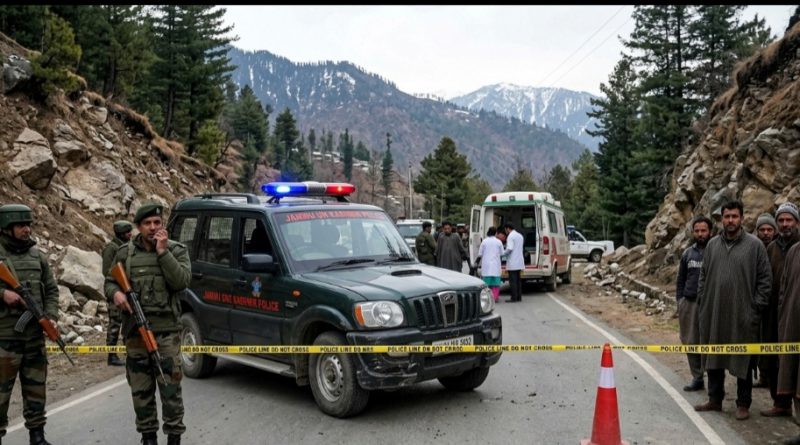
Emergency responses were initiated, and security forces cordoned off the area. Investigations were launched to identify those responsible. The Indian government attributed the attack to a Pakistan-based militant group, a claim that Pakistan denied.
India maintained that the incident was part of a broader pattern of cross-border militancy, a long-standing point of contention between the two countries.The geopolitical implications were immediate.
Within two weeks of the attack, India conducted air strikes targeting what it described as militant infrastructure across the border. The strikes marked a significant escalation and were followed by four days of cross-border shelling and aerial engagement between the two sides.
The situation raised international concern due to the nuclear capabilities of both countries. A ceasefire was announced shortly thereafter, bringing a temporary halt to hostilities.Domestically, the attack triggered widespread outrage.
Public discourse focused not only on the scale of the violence but also on the perceived targeting of civilians based on identity. Political leaders issued statements condemning the attack, and security agencies undertook reviews of existing protocols in tourist areas.
Additional measures were introduced, including increased patrols, surveillance and restrictions in sensitive zones across Jammu and Kashmir.Despite these responses, the human impact of the attack has remained concentrated within the families of those who were killed.
For many, the passage of time has not diminished the intensity of loss. Instead, grief has evolved into a persistent condition, shaped by memory and the absence of closure.In the case of Aishanya Dwivedi, her response to the loss of her husband has been marked by a combination of personal rituals and public engagement.
She has preserved the room they shared, maintaining it as it was before their trip. Objects such as a mirror installed by her husband remain in place, unchanged. She has described avoiding certain spaces within the room, reflecting an ongoing effort to maintain a connection with what has been lost.
Her engagement with the media has also been a notable aspect of her experience. Initially responding to requests for interviews, she has continued to speak about the attack and its aftermath.
She has characterised this engagement as therapeutic, providing a structured way to process grief. However, her public statements have also drawn criticism, particularly on social media platforms.One instance of controversy arose when she expressed disappointment that the names of victims were not mentioned in a parliamentary address by Narendra Modi following the subsequent military response.
The reaction online included criticism and harassment, highlighting the challenges faced by individuals who navigate personal loss within highly politicised environments.
She has stated that such reactions have not deterred her from speaking publicly.The broader pattern of response among affected families varies. While some have chosen to engage publicly, others have remained private, managing grief within personal spaces.
The absence of a uniform response underscores the complexity of trauma and the diverse ways in which individuals cope with loss.From an economic perspective, the attack had implications for Kashmir’s tourism sector, which had been recovering in recent years.
Pahalgam, along with other destinations in the region, had seen increased visitor numbers prior to the incident. The attack raised concerns about safety and led to temporary declines in tourist activity. Authorities have since sought to restore confidence through enhanced security measures and promotional efforts.
The incident also renewed focus on the broader conflict in Kashmir. The region has been disputed between India and Pakistan since 1947, leading to multiple wars and ongoing tensions. Militancy has been a persistent feature of the conflict, with civilians often caught in the crossfire.
Attacks on tourists, however, are relatively rare, making the Pahalgam incident particularly significant.Security analysts have noted that such attacks can have disproportionate impact, affecting not only immediate victims but also perceptions of stability and safety.
The targeting of tourists, who are often seen as symbols of normalcy and economic activity, can disrupt narratives of recovery and development.In the year since the attack, official narratives have focused on security improvements and the prevention of future incidents.
However, the long-term effectiveness of these measures remains subject to ongoing assessment. The underlying drivers of militancy, including political grievances and cross-border dynamics, continue to pose challenges.
For families affected by the attack, these broader considerations often remain secondary. Their experiences are defined by daily routines that incorporate loss into ordinary life.
Photographs, personal belongings and digital records serve as points of connection, preserving memories in tangible forms.The anniversary of the attack has prompted renewed attention, but for those directly impacted, the passage of time has not altered the fundamental reality of absence.
Each recollection, whether through conversation or solitary reflection, reinforces the permanence of what was lost.As Kashmir continues to navigate its complex political and security landscape, the Pahalgam attack stands as a reminder of the vulnerability of civilians within conflict zones.
Its legacy is not confined to official reports or policy discussions but is embedded in the lived experiences of those who continue to bear its consequences.