V&A East Exhibition Traces 125 Years of Black British Music Through Artists’ Reflections
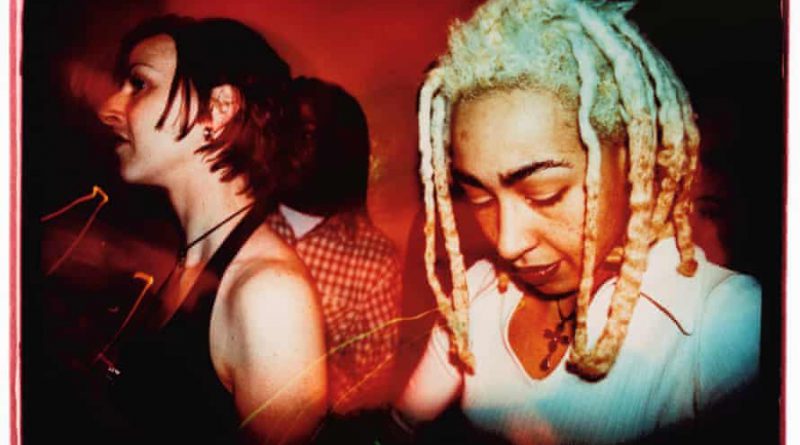
“It was a cauldron of people, with their tops off on podiums … it blew my mind.”
A new exhibition at the Victoria and Albert Museum’s east London outpost examines 125 years of Black music-making in Britain, drawing on personal reflections from prominent artists to contextualise archival material and cultural milestones. The inaugural show brings together photography, memorabilia and recorded histories, with contributions from musicians including Goldie, Estelle, Courtney Pine, and members of Flo.
Goldie’s contribution centres on his relationship with pioneering drum and bass DJs Kemistry and Storm, alongside their role in shaping UK rave culture. He recalls encountering Kemistry in Camden and being introduced to the Rage club night run by Fabio and Grooverider.
Describing the atmosphere, he characterises the scene as intense and transformative, noting the centrality of performance over identity in evaluating talent. Goldie also reflects on Kemistry’s death in a car accident in 1999, describing her continued influence on his creative process and personal memory.
Singer Estelle highlights the legacy of Slick Rick through a photograph taken by Janette Beckman. She situates his work within the development of British hip-hop, emphasising narrative storytelling as a defining feature of the genre. Estelle notes that Slick Rick’s stylistic identity has shaped perceptions of British artists internationally, particularly in relation to accent and delivery.
She also references her recent collaboration with him, including a voiceover contribution to his 2025 album and a joint performance at the MOBO Awards, describing his influence as foundational to her career trajectory.Producer Dennis Bovell focuses on poet and activist Linton Kwesi Johnson and political figure Darcus Howe, depicted in connection with the publication Race Today.
Bovell recounts their efforts to distribute the journal and its role in linking music with political discourse. He describes his collaboration with Johnson, which developed over time after an initial meeting during a BBC interview, and emphasises the significance of Johnson’s lyrical content in articulating issues of marginalisation and social exclusion in Britain.
Roland Gift of Fine Young Cannibals reflects on early experiences within the UK’s live music circuit, referencing a poster for The Beat’s debut album I Just Can’t Stop It (1980). He recounts being invited to tour with the band after sharing a demo and describes the volatile atmosphere at some performances, including instances of violence linked to subcultural rivalries.
Gift also recalls recording sessions in London and the subsequent formation of Fine Young Cannibals, situating these developments within a period of rapid change in the British music industry.Singer-songwriter Arlo Parks reflects on an image of Fabio and Grooverider observing a street party in 1988, linking it to broader themes of community and collective experience in urban music culture.
She draws parallels between historic UK rave scenes and contemporary events, including a Juneteenth celebration in New York, noting the continuity of public gatherings as sites of cultural exchange. Parks also highlights the DJs’ role in shaping drum and bass and their broader musical experimentation across genres, including soul, hip-hop, disco and house, particularly during their time on pirate radio.
Jazz musician Courtney Pine examines archival material connected to Leslie Hutchinson, also known as “Jiver” Hutchinson. Pine situates Hutchinson within a longer historical trajectory of Black musicians in Britain, referencing earlier figures such as John Blanke in the Tudor period.
He notes Hutchinson’s progression from repeated rejection to leadership within a military band, interpreting this as indicative of broader patterns of exclusion and eventual recognition. Pine also references his own research into Hutchinson’s life, including broadcast work and engagement with his family, and highlights surviving sheet music as evidence of early contributions to jazz orchestration.
The exhibition also addresses the role of carnival culture in shaping contemporary British music. One contributor describes the Notting Hill Carnival as a formative influence, citing its role in sustaining Caribbean musical traditions, including soca, dancehall and reggae.
The account links personal experiences of attending and later performing at the event to the development of new material, with the carnival environment characterised as a site of both cultural continuity and artistic production.Members of Flo Stella, Renée and Jorja discuss their reception of a Brit Award, designed by Nigerian artist Slawn, as part of the exhibition narrative.
They emphasise the importance of recognising the international and diasporic influences underpinning British music. The group situates their success within a lineage of earlier acts, including Little Mix and Sugababes, noting the role of representation in shaping opportunities for subsequent generations. They also highlight audience engagement across diverse communities as central to their work.
The V&A exhibition positions these individual accounts within a broader institutional effort to document Black British cultural production. By combining personal testimony with archival artefacts, it seeks to trace the evolution of musical forms and the social contexts in which they emerged.
The inclusion of voices spanning multiple generations reflects an attempt to bridge historical documentation with contemporary practice, situating Black British music as both a cultural and historical continuum.