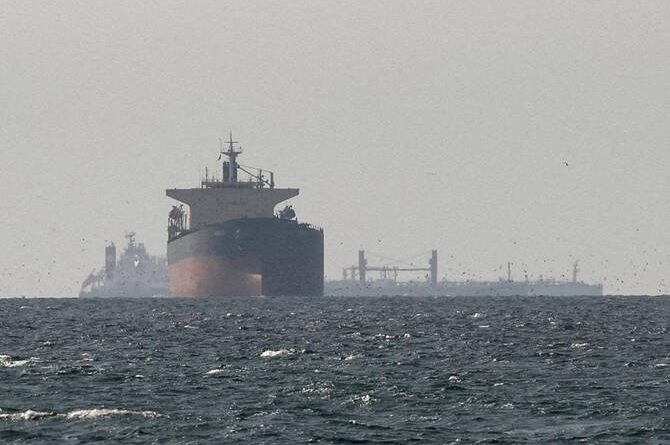
Oil Tankers Resume Transit Through Hormuz After Ceasefire
Singapore— Three fully laden supertankers passed through the Strait of Hormuz on Saturday, shipping data showed, marking the first known outbound crude shipments from the Gulf since a U.S.-Iran ceasefire deal eased disruptions in the key energy corridor.
The Liberia-flagged Very Large Crude Carrier (VLCC) Serifos and China-flagged VLCCs Cospearl Lake and He Rong Hai transited via a designated passage that bypasses Iran’s Larak Island, according to data from LSEG.
Each vessel has the capacity to carry around 2 million barrels of oil.The Strait of Hormuz, through which about one-fifth of global oil and liquefied natural gas supplies pass, had been effectively blocked by Iran since the outbreak of conflict in late February, contributing to supply disruptions and a sharp rise in oil prices.
Serifos, chartered by Thailand’s state energy firm PTT, is carrying crude loaded from Saudi Arabia and the United Arab Emirates and is expected to arrive at Malaysia’s Malacca port on April 21, according to LSEG and Kpler data. It is among several vessels for which Malaysia had sought clearance from Iran to transit the strait, sources said.
Cospearl Lake, carrying Iraqi crude, is scheduled to reach Zhoushan port in eastern China on May 1, while the discharge destination for He Rong Hai, which is transporting Saudi oil, remains unclear. Both vessels are chartered by Unipec, the trading arm of Chinese energy major Sinopec.
Shipping data also showed that hundreds of tankers remain stranded in the Gulf awaiting passage during the limited ceasefire window, underscoring continued constraints on maritime traffic.At the same time, three empty tankers Mombasa B, Agios Fanourios I and Shalamar were navigating the strait to enter the Gulf and load crude.
One of them signaled plans to load Basrah oil in Iraq for delivery to Vietnam.Industry sources and companies involved did not immediately respond to requests for comment.
The partial resumption of tanker movement highlights the critical role of the Strait of Hormuz in global energy flows and the sensitivity of oil markets to geopolitical developments in the region.