Peru Votes in Fragmented Election as Runoff Appears Inevitable
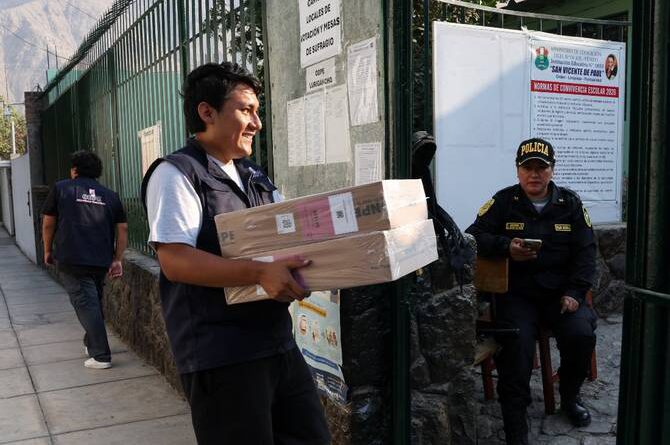
Lima— Peruvians voted on Sunday in a crowded presidential and congressional election, with more than 30 candidates competing in a first round widely expected to lead to a June runoff, following years of political instability that have eroded public trust and raised doubts over governance in the copper-rich nation.
Polling stations opened at 0700 local time (1200 GMT) for roughly 27 million eligible voters, as no candidate appeared close to securing the more than 50% required to win outright. The likely second-round vote on June 7 could extend uncertainty in the world’s third-largest copper producer amid rising crime and shifting geopolitical dynamics.
Voters expressed frustration with the political class. “Peru is a mess, and there’s no candidate worth voting for,” said Lima resident Gloria Padilla, reflecting widespread disillusionment after years of turmoil.
Since 2018, Peru has had eight presidents, a rapid turnover driven by impeachments, corruption scandals and fragile governing coalitions that have hindered policymaking.
Analysts say the instability has deepened distrust in Congress and other institutions.“People really despise the current Congress,” said Martin Cassinelli of the Atlantic Council, adding that many voters hold lawmakers responsible for prolonged political chaos.
The fragmented field reflects a broad anti-establishment mood, with candidates ranging from experienced political figures to outsiders. Conservative Keiko Fujimori, making her fourth presidential bid after reaching three prior runoffs, has campaigned on restoring order and economic stability, appealing to voters concerned about rising crime.
Her candidacy remains polarizing due to her political legacy and past legal challenges.Ricardo Belmont, a former Lima mayor running on a center-left platform, has surged into contention after a late rise in support, while comedian Carlos Alvarez has gained traction with a tough-on-crime message.
On the right, businessman and former mayor Rafael Lopez Aliaga has promoted socially conservative policies, though his support has fluctuated.Public security has dominated the campaign, with increasing homicide and extortion rates linked partly to drug trafficking and illegal mining.
Leading candidates have proposed expanding the military’s role in domestic security.The election also carries broader geopolitical implications. Peru’s economic ties with China, its largest trading partner and a major investor in mining and infrastructure, have drawn attention from the United States, which has increased engagement in the lead-up to the vote.
Whoever advances to the runoff will face a divided Congress and a newly reinstated Senate, complicating legislative efforts and potentially raising the risk of further political confrontation.
Polls are set to close at 5 p.m. local time (2200 GMT), with preliminary results expected shortly afterward.