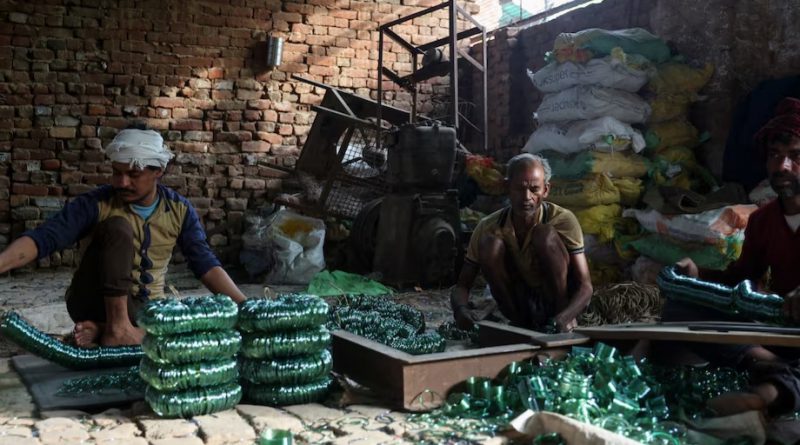
Gas Crunch Jolts India’s Glass Hub as War Disrupts Industry
“If the war drags on another month, our entire production season could be wiped out,”
A prolonged Middle East conflict has disrupted gas supplies to India’s industrial sector, forcing glass manufacturers in Firozabad to scale back operations and lay off workers, highlighting vulnerabilities in the country’s energy-dependent manufacturing base.
Known as India’s “Glass City” with a centuries-old tradition of glassmaking, Firozabad has seen production decline sharply as furnaces reliant on continuous high-temperature gas supply operate below capacity. Industry participants said the disruption has hit during a peak production period, compounding economic losses.
Glass furnaces require temperatures above 1,000 degrees Celsius to maintain molten consistency, making uninterrupted gas supply essential. Supply cuts exceeding 20% since early March have reduced output by about 40%, according to furnace operators, reflecting the disproportionate impact of energy shortages on production.
The disruption is linked to the ongoing conflict involving Iran, which has strained energy markets and supply chains. India’s dependence on imported gas has made its industrial base particularly exposed, with authorities prioritising household and essential usage when supplies tighten.Workers have borne the immediate impact.
At one unit that employed more than 500 workers until last month, fewer than 200 remain on payroll, according to furnace operator Somesh Yadav. Across the city, smaller workshops have shut operations temporarily as they await stable fuel availability.
The glass industry in Firozabad employs around 200,000 workers directly, according to the Uttar Pradesh Glass Manufacturers’ Syndicate, with total employment rising to approximately 500,000 when indirect roles are included. Industry officials warned that prolonged disruption could lead to widespread job losses.Rajkumar Mittal of the industry group said the continuation of current conditions could erase the production cycle for the season, which typically runs from March through August.
This period is crucial for fulfilling export orders tied to major retail cycles in Western markets.Manufacturers reported a sharp decline in output and exports. Mukesh Kumar Bansal, a local exporter supplying markets in the United States and Europe, said his factory’s production had dropped by more than one-third, with no shipments leaving in March.
Industry estimates suggest glassware exports fell by as much as 20% last month, despite earlier projections of annual growth.Logistics disruptions have compounded the crisis. India relies heavily on Gulf shipping routes, which have become costlier due to higher freight and insurance charges linked to the conflict.
Shipping a 40-foot container to Europe has risen by more than 60%, exporters said, while shipments to Gulf markets have stalled entirely.Economists have pointed to broader risks for India’s trade flows. Sonal Varma of Nomura described India as highly vulnerable to disruptions in the Strait of Hormuz, a key artery for energy and trade.
Manufacturers reported consignments stranded at ports, including Mumbai, as transport costs surged and routes were rerouted.The impact has extended beyond glassmaking. Textile exporters in Karur and manufacturers in other sectors such as machinery and auto components have also reported rising freight costs and falling shipments. Stiffenbabu Raju of Home Lines Textiles said container costs had more than tripled within weeks, forcing the suspension of exports as buyers resisted price increases.
Industry bodies estimate that about 17% of India’s more than 20 million small manufacturing and exporting units are facing sharp increases in input and logistics costs. K.E. Raghunathan of the Association of Indian Entrepreneurs said many businesses risk closure if conditions persist, with significant employment implications.State-run GAIL Gas said in a statement that supplies to Firozabad and nearby industrial areas continued under allocated volumes, with availability exceeding consumption.
The company added that some customers may have reduced offtake due to prevailing uncertainties rather than supply restrictions.The disruptions come as India seeks to raise manufacturing’s share of gross domestic product to 25% from about 17%, a target that analysts say could be challenged by prolonged energy and trade volatility.
Data from HSBC showed India’s manufacturing activity falling to a four-and-a-half-year low in March, reflecting weakening demand and supply-side constraints linked to the conflict.