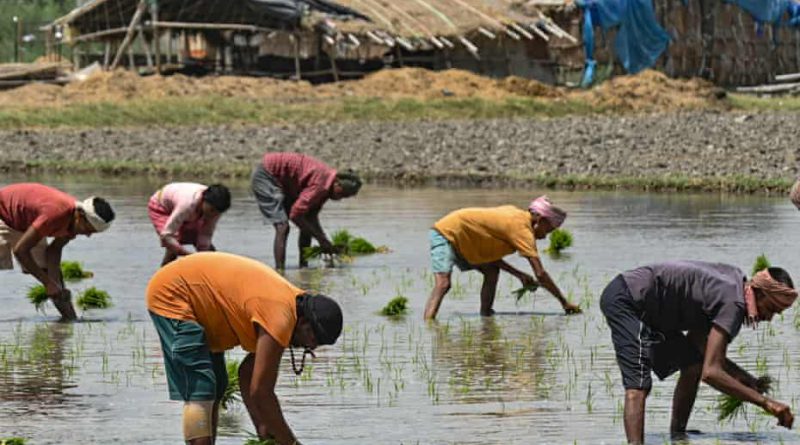
Gulf tensions ripple into India’s farms as fertiliser fears grip Punjab growers
“If we don’t get fertilisers, there will be less yield. That will affect my entire family and the entire region,” said a farmer, reflecting mounting anxiety over supply disruptions.
Farmers in India’s northern grain belt are increasingly worried that a distant conflict in the Gulf could disrupt fertiliser supplies and threaten crop yields, as tensions linked to the closure of a key maritime route reverberate through global commodity markets.
In Punjab, a state central to India’s wheat and rice production, growers say uncertainty over input availability has begun to overshadow routine agricultural planning. Gurvinder Singh, a 52-year-old farmer, said concerns over fertiliser access have intensified in recent weeks as global supply chains face strain.
“We are already struggling with profits,” Singh said. “If we don’t get fertilisers, there will be less yield. That will affect my entire family and the entire region, because we are completely dependent on agriculture.
”Singh’s remarks reflect broader anxieties among farmers who rely heavily on imported fertiliser components, many of which are linked to energy markets and international shipping routes. India is one of the world’s largest consumers of fertilisers, and any disruption in supply can have immediate implications for crop productivity.
The concerns follow Iran’s move to blockade the Strait of Hormuz, a critical passage for global oil and gas shipments, in response to strikes by the United States and Israel. The disruption has triggered volatility in energy markets, with ripple effects across industries dependent on fuel and petrochemical inputs.
Fertilisers, particularly nitrogen-based variants, are closely tied to natural gas prices, making them vulnerable to energy supply shocks. Analysts say any sustained increase in fuel costs or shipping disruptions could raise input prices or delay deliveries, affecting farmers during key planting cycles.
In Punjab, often referred to as India’s breadbasket, agriculture remains the primary source of income for millions. Farmers typically follow a rotation of wheat and rice crops, with fertiliser use playing a crucial role in maintaining yields. Any reduction in application due to shortages or high costs could directly impact output.
“We are praying this war stops because it will not spare us either,” Singh said, underscoring the sense of vulnerability among rural communities despite their geographic distance from the conflict.
The potential for supply disruptions comes at a time when many farmers are already facing margin pressures from fluctuating crop prices and rising input costs. Industry observers note that even short-term shortages can have lasting consequences, particularly if they coincide with critical stages of crop development.
India imports a significant portion of its fertiliser requirements, including key raw materials such as potash and phosphates. Supply chains for these inputs are globally integrated, often passing through major shipping routes in the Middle East. Any bottleneck in transit can lead to delays and price spikes in domestic markets.
Government officials have in the past taken steps to secure fertiliser supplies through strategic reserves and international agreements. However, traders say prolonged disruption in maritime logistics could test these buffers, especially if global competition for limited supplies intensifies.
The broader geopolitical situation has also raised concerns about inflationary pressures. Higher energy prices could increase transportation and production costs across sectors, feeding into food prices and complicating economic management.
For farmers like Singh, the uncertainty is immediate and personal. With planting decisions already underway, the availability and affordability of fertilisers will be a key determinant of the upcoming harvest.
As global markets react to developments in the Gulf, the impact is being felt far beyond the region, highlighting the interconnected nature of modern supply chains.
For India’s agricultural heartland, the stakes are tied not only to international diplomacy but also to the livelihoods of millions who depend on stable inputs to sustain production.