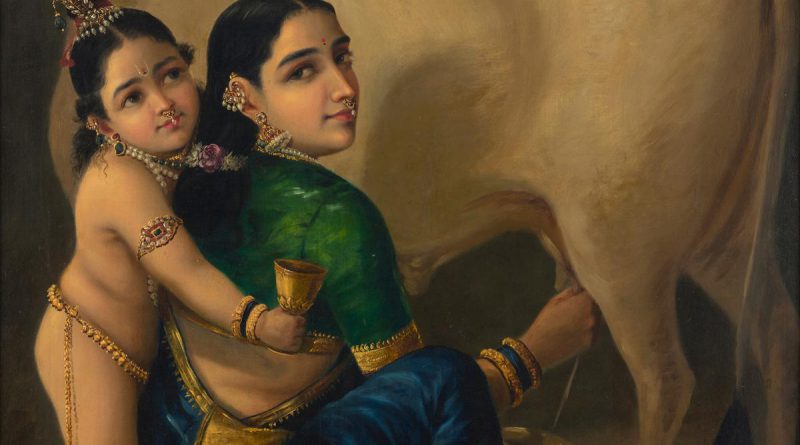
Raja Ravi Varma painting sets record at ₹167.2 crore, underscoring surge in Indian art market
“This national treasure deserves to be made available for public viewing periodically.”
A late 19th-century painting by Raja Ravi Varma has set a new benchmark for Indian art after it sold for ₹167.2 crore ($17.98 million) at an auction conducted by Saffronart, surpassing previous records in the modern Indian art segment.
The work, Yashoda and Krishna, was acquired by Cyrus S. Poonawalla, chairman and managing director of Serum Institute of India. The final sale price exceeded the auction house’s pre-sale estimate of ₹80–120 crore, reflecting sustained demand among collectors for historically significant Indian works.
Poonawalla described the purchase as both a privilege and a responsibility, stating that efforts would be made to ensure the painting is accessible for public viewing. His acquisition marks one of the highest-value private purchases of Indian art to date.
The sale eclipses the previous record held by M. F. Husain’s Untitled (Gram Yatra), which had fetched over ₹118 crore. Market participants said the new record signals a strengthening valuation environment for Indian masters, particularly works with strong cultural and historical associations.
Painted in the 1890s during the peak of Ravi Varma’s career, Yashoda and Krishna depicts a domestic scene rooted in Hindu mythology, portraying the child Krishna with his foster mother Yashoda. The composition reflects Varma’s distinctive approach of combining European oil painting techniques with Indian themes, a style that contributed to his enduring influence on visual culture in India.
Born in 1848 in Kilimanoor in present-day Kerala, Ravi Varma is widely regarded as a foundational figure in modern Indian art. His portrayals of mythological figures, including Shakuntala, Sita, Damayanti and Draupadi, have had a lasting impact on artistic representation and popular imagery.
Pooyam Thirunal Gouri Parvathi Bayi, a member of the erstwhile Travancore royal family and a descendant of the artist, said the sale reflects a reassessment of Ravi Varma’s legacy.
She noted that while the painter had faced criticism in parts of the 20th century, including being described as a “poster painter,” his work is now receiving broader recognition for its artistic and cultural significance.
“I am proud that my great-grandfather is getting the recognition he deserves,” she said, adding that the retention of the artwork within India was a positive outcome. She also highlighted his role in popularising elements of Indian attire and jewellery through his paintings, which contributed to shaping visual representations of cultural identity.
Bayi added that it remains to be seen how the new owner will facilitate public access to the painting, noting that visibility and engagement are key to sustaining appreciation for such works.
According to Saffronart, the sale demonstrates the continued depth of demand in the Indian art market, particularly for museum-quality works. Minal Vazirani, president and co-founder of the auction house, said the result reflects the enduring appeal of historically significant pieces.
“Great art has a way of reaffirming its timeless value,” she said, describing the sale as indicative of both market strength and cultural resonance.The trajectory of Yashoda and Krishna, from its creation in the late 19th century to its sale in a contemporary auction setting, illustrates shifts in the valuation and perception of Indian art over time.
Works by Ravi Varma, once reproduced widely through prints and calendars, have increasingly been re-evaluated within institutional and collector circles as foundational to India’s artistic heritage.
The auction outcome also highlights the growing role of high-net-worth individuals in shaping the Indian art market, particularly in the acquisition and preservation of culturally significant works.
Industry observers note that such purchases can influence both pricing benchmarks and the visibility of Indian art on the global stage.