Albanese warns of prolonged economic shock from Middle East war, urges fuel restraint
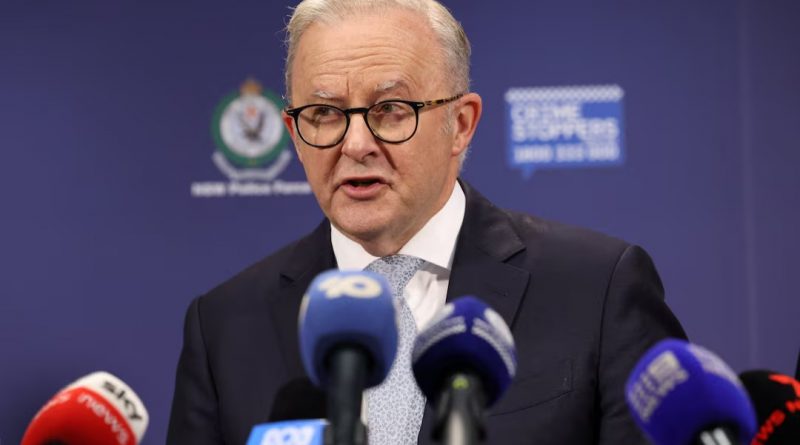
Sydney — Australian Prime Minister Anthony Albanese said on Wednesday the economic fallout from the Middle East conflict would persist for months, urging citizens to limit fuel consumption and use public transport as rising prices and supply pressures grip the country.
In a nationally broadcast address aired simultaneously across major television and radio networks, Albanese said the war had triggered an unprecedented surge in petrol and diesel prices, even though Australia is not directly involved in the conflict.
“I understand that right now it’s hard to be positive,” Albanese said, adding that Australians were nonetheless bearing the economic burden through higher energy costs. He described the price spike as the largest in the country’s history and warned that the disruption would continue in the near term.
Australia, which imports roughly 90% of its fuel, has faced sharp price increases and localised shortages following the escalation of the U.S.-Israeli war on Iran and the blockade of the Strait of Hormuz, a critical artery for global oil shipments.
Albanese called on citizens to avoid panic buying ahead of the Easter holidays and to adopt measures that could ease demand pressures, including using trains, buses, and trams where possible.
He stressed the importance of conserving fuel for essential services and regional communities.The conflict, now in its second month, has disrupted energy markets, contributed to widespread casualties, and raised concerns about broader economic instability.
Earlier this week, the government announced it would temporarily halve fuel excise taxes and suspend the heavy road user charge for three months, a move expected to cost about A$2.55 billion ($1.75 billion) as authorities attempt to cushion households from rising costs.
Despite Australia holding its highest fuel reserves in 15 years, stock levels remain below the 90-day benchmark recommended by the International Energy Agency, underscoring the country’s vulnerability to prolonged supply disruptions.
Treasurer Jim Chalmers said small businesses affected by the crisis would be granted easier access to credit, as the government seeks to stabilise economic conditions.
“We know that the fallout is affecting everyone,” Chalmers told reporters, adding that coordinated efforts would be key to navigating the period of heightened uncertainty.