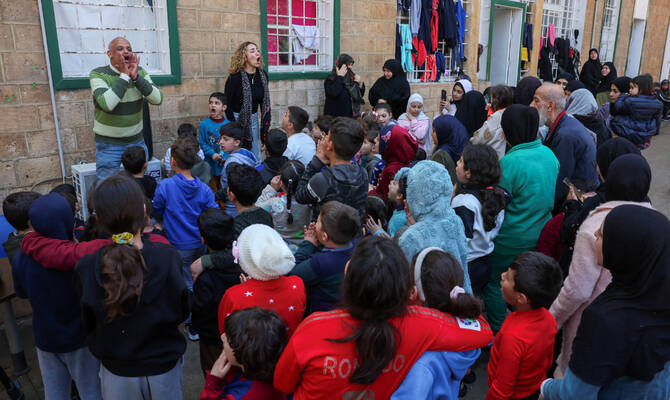
War shuts schools in Lebanon, leaving nearly half a million children without classes
Beirut — Nearly half a million students in Lebanon have been forced out of school as ongoing conflict involving Hezbollah and Israel disrupts education, with hundreds of public schools converted into shelters for displaced families, according to UNICEF.
The war, which escalated on March 2, has led to the closure of more than 350 public schools, while others in areas affected by Israeli bombardment remain shut, leaving students to rely on improvised and often inadequate remote learning arrangements.
In Beirut, displaced families are living inside school buildings where classrooms have been partitioned into makeshift living spaces. Students like 17-year-old Ahmad Melhem are attempting to continue their education using recorded lessons on shared devices, often without reliable internet access.
Melhem, displaced from the capital’s southern suburbs, said he returned home briefly to retrieve schoolbooks despite the risks. “We’re trying with everything we have to continue our education,” he said, adding that he hopes to pursue engineering studies.
Many schools have resumed limited online teaching, but shortened schedules and reduced subject offerings have affected the quality of education. Students say they struggle to concentrate in crowded shelters or noisy shared spaces.
Access to education has been further constrained by limited connectivity and resources. In some shelters, internet access is only available outdoors, forcing students to study in unsuitable environments or rely on recorded lessons.
According to UNICEF, disparities in digital access between regions and households have created a “big digital divide,” affecting both students and teachers. Some families share a single mobile device among several children, while others lack even basic supplies.
UNICEF has introduced an online platform with recorded lessons and a phone-based system to help students access materials without internet, but officials warn these measures cannot fully replace in-person schooling.
The conflict has killed more than 1,100 people in Lebanon, including 122 children, and displaced over one million, according to authorities. Education experts warn that prolonged disruption increases the risk of permanent dropouts, particularly among girls and adolescents vulnerable to early marriage.
The World Bank estimated in a 2023 report that each day of public school closure costs Lebanon’s economy around $3 million, highlighting the broader impact of the crisis.
Children in southern Lebanon have faced repeated disruptions since hostilities between Hezbollah and Israel reignited in October 2023, compounding existing challenges in the country’s education system.
At temporary shelters, families continue to prioritize schooling despite the conditions. “Education is the only thing left for my children,” said one displaced parent, reflecting widespread concern over a lost generation.