Trump touts GOP gains despite economic strain, electoral warning signs
Washington — U.S. President Donald Trump said Republicans would expand their congressional majorities in November’s midterm elections, even as rising economic pressures and early electoral setbacks signal potential challenges for his party.
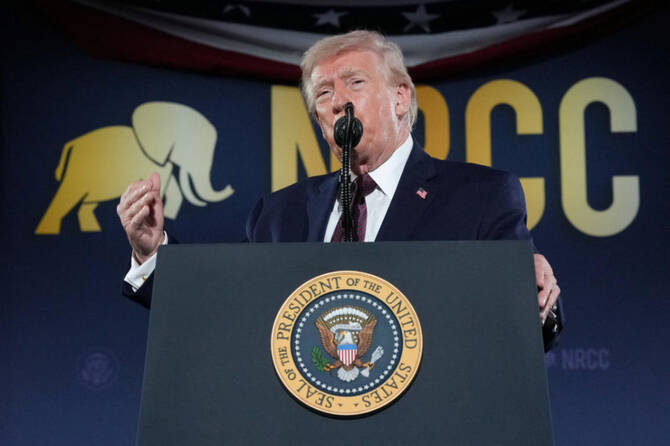
Speaking at the National Republican Congressional Committee fundraising dinner in Washington, Trump sought to rally party members, acknowledging historical trends in which incumbent presidents typically lose seats but insisting Republicans would defy expectations.
“We’ll have bigger majorities in the House and Senate than we do today”. The remarks came as Democrats scored a symbolic victory in Florida, where Emily Gregory flipped a state legislative district that includes Trump’s Mar-a-Lago estate, underscoring shifting political dynamics in a traditionally Republican stronghold.
House Speaker Mike Johnson indicated the party’s fortunes were closely tied to Trump’s leadership, presenting him with what he called the first “America First award” at the event.
The ongoing conflict with Iran has contributed to rising fuel prices and broader cost-of-living concerns, complicating the political landscape for Republicans. Gasoline prices have climbed to an average of $3.98 per gallon, up from under $3 before the conflict began, according to AAA.
Polling data from the Associated Press-NORC Center for Public Affairs Research shows 59% of Americans believe U.S. military action against Iran has gone too far, while 45% report significant concern about affording fuel in the coming months.
Economic pressures extend beyond energy, with inflation expected to rise alongside higher borrowing costs and a weakening labor market. Employers cut 92,000 jobs last month, adding to voter unease over economic stability.
Some Republicans have voiced concerns about the administration’s communication and long-term strategy in Iran. Senator Lisa Murkowski said constituents were seeking clarity on the conflict and potential troop deployments, describing current messaging as insufficient.
Others urged patience, arguing that the political impact would depend on whether the administration achieves its strategic objectives, including curbing Iran’s nuclear ambitions and restoring stability to global energy routes such as the Strait of Hormuz.
Trump downplayed economic concerns as temporary, linking short-term disruptions to broader national security goals. He maintained that the military action was necessary despite its economic impact, framing it as a decisive move against Iran’s nuclear capabilities.
The political outlook for Republicans remains closely tied to developments in the conflict and their economic consequences in the months leading up to the elections.