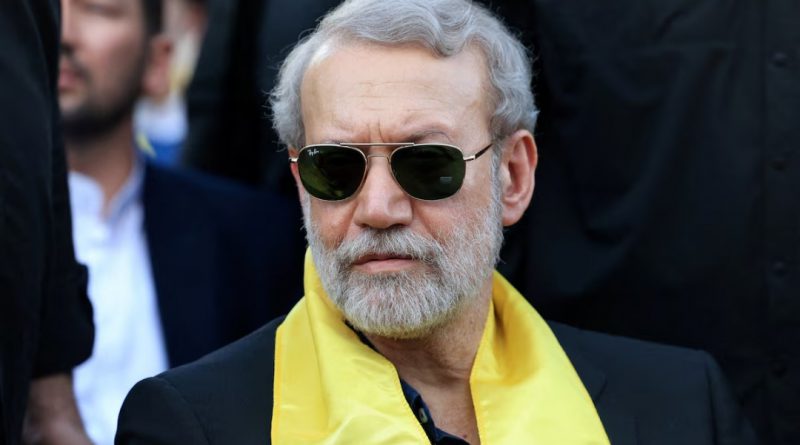
Airstrike kills Iran powerbroker Ali Larijani, key Khamenei ally
Dubai — Ali Larijani, a senior Iranian politician and close adviser to Supreme Leader Ali Khamenei, was killed in a U.S.-Israeli airstrike on the eastern outskirts of Tehran while visiting family, Iranian state-linked media and Israeli officials said on Tuesday, marking the latest escalation in a widening regional conflict.
Iran’s semi-official Fars news agency reported that Larijani, 67, died in the strike, while Israel’s Defence Minister Israel Katz said earlier that he had been targeted and killed in an Israeli operation. There was no immediate independent confirmation of the circumstances of the attack.
Larijani, a prominent figure from a clerical family that rose to influence after the 1979 Islamic Revolution, held a series of senior roles across Iran’s political and security establishment.
A former commander in the Revolutionary Guard during the Iran-Iraq war, he later led the state broadcaster and served as secretary of the Supreme National Security Council.
He was also speaker of parliament for 12 years, consolidating his position as a key intermediary between Iran’s political factions and the office of the supreme leader.
As one of Khamenei’s trusted lieutenants, Larijani played a central role in shaping Iran’s nuclear strategy, which sought to advance atomic capabilities while avoiding direct confrontation with Western powers. He was a frequent interlocutor in negotiations, presenting Iran’s position in public and diplomatic settings.
His portfolio extended beyond nuclear policy to include managing regional alliances and overseeing internal security responses during periods of unrest.
Despite being viewed by some analysts as relatively pragmatic compared to other hardline figures, Larijani was accused by Western officials of involvement in the suppression of anti-government protests earlier this year. The crackdown, which resulted in thousands of deaths, led Washington to impose sanctions on him last month.
Following the launch of U.S.-Israeli strikes on Feb. 28, Larijani publicly accused Iran’s adversaries of attempting to destabilize and weaken the country, while warning against domestic dissent.
His death comes amid intensifying military exchanges that have targeted senior Iranian figures, raising questions about the resilience of Tehran’s leadership structure and the future direction of its security and nuclear policies.