Nigel Farage Declares War on the Old Order in His Blueprint for Britain
Wales_ The old political order in Britain is facing its most direct challenge in years as Nigel Farage positions himself and his party, Reform UK, as the vehicle of a sweeping populist transformation aimed at capturing power by the next general election.
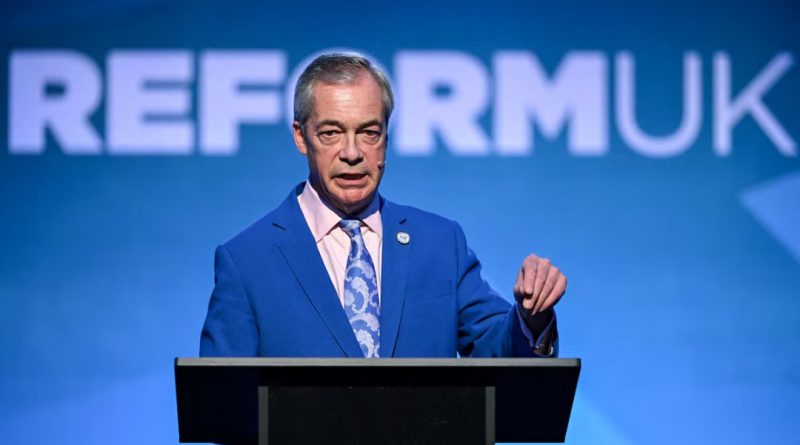
Standing before supporters in Newport, Farage delivered a message that was both defiant and ambitious: Britain, he argued, is ready to break decisively from what he describes as a stagnant liberal consensus.
A decade after his central role in the Brexit referendum, Farage believes the same populist energy can propel him all the way to 10 Downing Street.“The world is changing,” Farage told Reuters, framing his campaign as part of a broader global shift.
He pointed to leaders such as Donald Trump, Viktor Orbán, and Javier Milei as evidence of a growing backlash against establishment politics. “Very, very big changes are happening,” he said.
At the core of Reform UK’s emerging platform is a set of policies designed to disrupt long-standing norms in British governance. These include proposals for mass deportations of illegal migrants, withdrawal from certain international human rights frameworks, and sharp reductions in overseas aid spending.
Farage argues that such measures are necessary to restore sovereignty, national identity, and public trust.The rhetoric marks a direct challenge to Prime Minister Keir Starmer and the governing Labour Party, whom Farage accuses of clinging to outdated ideas. “Starmer is stuck in a mindset that is 15 years out of date,” he said, portraying Labour as emblematic of a political class disconnected from ordinary voters.
Recent opinion polls suggest Reform UK has gained significant traction, in some cases outpacing Labour. While such figures remain fluid, they have emboldened Farage and his allies, who now speak openly about forming a government.
For a party that has existed in its current form for only five years and holds just a handful of seats in Parliament, the rise is striking.Yet the path to power remains steep.
Britain’s parliamentary system, dominated by established parties, presents structural challenges for newcomers. Reform UK currently holds only eight seats in the 650-member House of Commons, raising questions about its organizational depth and readiness for governance.Critics argue that Farage’s agenda, while resonant with a segment of the electorate, risks deepening divisions within British society.
His emphasis on immigration and national identity has long made him a polarizing figure. Opponents warn that abandoning international agreements could isolate Britain diplomatically and undermine its global standing.Supporters, however, see him as a necessary disruptor.
They credit Farage with reshaping British politics through his relentless campaigning for Brexit, which culminated in the UK’s departure from the European Union. To them, Reform UK represents a continuation of that project a push to fully realize what they believe Brexit promised.
Farage himself appears increasingly confident on the international stage. He noted a warmer reception at the World Economic Forum Annual Meeting in Davos this year, contrasting it with the skepticism he faced in the past. “A third of the delegates I met were genuinely interested,” he said. “Next year it will be 50%.
”Such remarks reflect a broader ambition: not merely to win power at home, but to position himself within a global network of populist leaders reshaping politics across continents. In this vision, Britain becomes part of a wider realignment, moving away from liberal internationalism toward a more nationalist, sovereignty-focused model.
Despite the momentum, significant uncertainties remain. Reform UK must expand its grassroots presence, develop detailed policy frameworks, and convince a broader electorate that it can govern effectively. The scrutiny will intensify as the next election approaches, with rivals eager to test the party’s claims.
For now, Farage is betting that dissatisfaction with the status quo will outweigh concerns about experience. His message is clear: the old order, as he sees it, has failed and a new political era is within reach.
Whether that message translates into electoral success will determine not only Farage’s future, but potentially the direction of Britain itself.