
Memory and Empire: Why Geography Outlives Civilizations
Human history is often told through the rise and fall of rulers, wars and political systems. Yet beneath these narratives lies a quieter and more enduring force: geography. Landscapes rarely change as quickly as civilizations do.
Rivers continue to flow, mountains stand immovable, and deserts preserve the remains of cultures that once flourished. When historians examine the past through geography, a different pattern emerges one in which the environment shapes, sustains and ultimately outlives human societies.
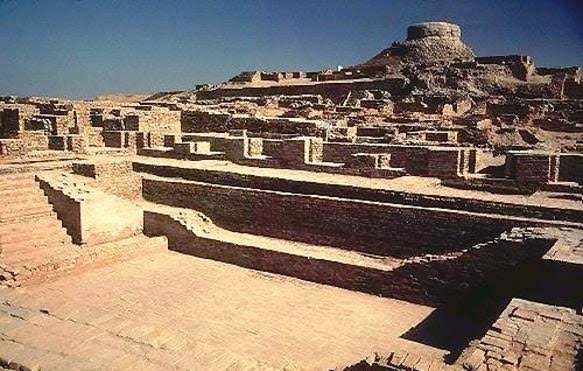
Few ancient cultures demonstrate this relationship more clearly than the Indus Valley Civilization. Flourishing between roughly 2600 and 1900 BCE, this civilization spread across a vast region of South Asia along the Indus River and its tributaries. Its urban centers, including Mohenjo-daro and Harappa, reveal a level of planning and engineering sophistication remarkable for its time.
Cities were organized with grid-like streets, drainage systems and standardized brick construction. Trade networks extended as far as Mesopotamia, suggesting a vibrant commercial economy. Yet despite these achievements, the civilization gradually declined. Scholars still debate the precise reasons behind its disappearance, but environmental changes likely played a significant role.
Shifting river courses and weakening monsoon patterns may have disrupted agriculture and water supplies. The ancient Ghaggar-Hakra River system, once believed to support several Indus settlements, appears to have gradually dried. Such changes would have forced populations to migrate or reorganize their economic life.
This pattern appears throughout world history. The prosperity of ancient Egypt depended on the seasonal flooding of the Nile River. Each year the river deposited fertile silt along its banks, sustaining agriculture and enabling the emergence of a powerful state. When floods were weak or irregular, famine and political instability often followed.
Similarly, the expansion of the Roman Empire was closely connected to geography. The Mediterranean Sea acted as a vast highway linking Europe, North Africa and the Middle East. Roman ships carried grain, soldiers and goods across this inland sea, turning distant provinces into parts of a single economic system.
Mountains and deserts also shaped political boundaries. The Himalayas formed a formidable natural barrier between South and Central Asia for centuries.
Yet they were never entirely impassable. Traders and travelers crossed high mountain passes along routes that eventually became part of the historic Silk Road, connecting civilizations across Eurasia.Geography therefore does not simply limit human action; it directs it. Rivers encourage settlement, mountains guide migration and seas enable trade.
Over time these geographical influences shape cultural identities and political structures.Modern archaeology increasingly emphasizes this environmental perspective. Researchers now study climate records, sediment layers and ancient pollen samples to reconstruct how landscapes changed over time. These scientific methods reveal that many historical transformations coincided with environmental shifts.
For example, prolonged droughts have been linked to political instability in several ancient societies. Changes in rainfall patterns could reduce agricultural output, leading to migration, conflict and social upheaval. Such pressures might not immediately destroy a civilization, but they often weaken its resilience.
Yet landscapes preserve memory even after societies disappear. Desert sands can bury cities for centuries, protecting them from decay. Forests may conceal ancient temples and roads until archaeologists rediscover them. In this way the earth becomes a vast archive of human history.
The ruins of ancient settlements remind us that civilizations are temporary arrangements upon a much older planet. Every empire once believed in its permanence, yet eventually yielded to forces of change political, economic or environmental.Today historians increasingly view the past not as a sequence of isolated events but as a long interaction between humans and nature.
Civilizations rise where geography allows them to flourish and decline when conditions shift.Understanding this relationship is not merely an academic exercise. It offers insight into the future as well.
Modern societies remain dependent on environmental stability for food, water and economic activity.History’s landscapes remind us that while human ambition may be powerful, it is never entirely independent of the natural world.


