Trump open to Kim summit as diplomacy with Pyongyang resurfaces, Seoul says
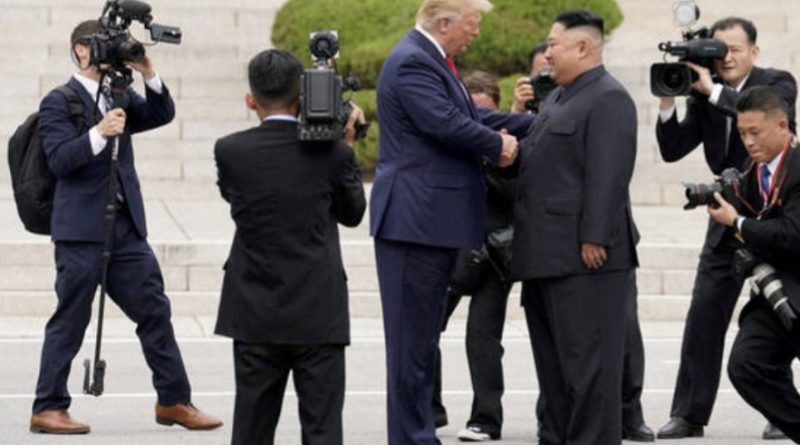
Seoul — U.S. President Donald Trump believes a meeting with North Korean leader Kim Jong Un would be “good,” South Korean Prime Minister Kim Min-seok said on Saturday after talks with the U.S. leader in Washington, signaling renewed interest in high-level diplomacy with Pyongyang.
Kim Min-seok told reporters in the United States that Trump raised the possibility of meeting Kim Jong Un during a potential trip to China later this year or at another time, adding that the timing was uncertain but dialogue itself remained important.“Meeting (Kim Jong Un) would be good.
It’s really good to meet,” Kim quoted Trump as saying, noting the U.S. president suggested the encounter could occur during an upcoming visit to China or at a later stage.
Washington has for decades led international efforts to dismantle North Korea’s nuclear weapons program through sanctions, diplomacy and negotiations, though these measures have produced limited results.
The Trump administration has recently pushed to revive high-level engagement with Pyongyang, with officials exploring the possibility of a summit with Kim Jong Un later this year.
Kim Min-seok said he and Trump agreed that a meeting occurring soon, potentially around the time of a visit to Beijing, would carry symbolic significance.“If it happens soon, or around the time of the China visit, that would in itself be meaningful,” Kim said.
He added that the U.S. president appeared firmly committed to maintaining some form of contact with North Korea regardless of when a summit might take place.
Trump has repeatedly indicated willingness to engage directly with Kim Jong Un. During a trip to Asia in October, he said he was “100 percent” open to meeting the North Korean leader, though Pyongyang did not immediately respond to the offer.
More recently, Kim Jong Un suggested the United States and North Korea could “get along” if Washington recognized Pyongyang’s nuclear status, a position that conflicts with long-standing U.S. policy aimed at denuclearizing the Korean Peninsula.
At the same time, North Korea has signaled skepticism toward diplomatic initiatives from Seoul, describing South Korea’s latest peace efforts as a “clumsy, deceptive farce.”
North Korea continues to advance its military capabilities while maintaining close strategic ties with Russia, developments that have raised concerns among the United States and its allies in the region.
Pyongyang has also condemned the recent U.S.-Israeli military strike on Iran, describing it as an “illegal act of aggression,” reflecting broader geopolitical tensions involving Washington and its adversaries.
The possibility of renewed talks between Washington and Pyongyang comes as regional diplomacy remains fragile, with negotiations over North Korea’s nuclear program stalled despite years of international pressure and intermittent dialogue.