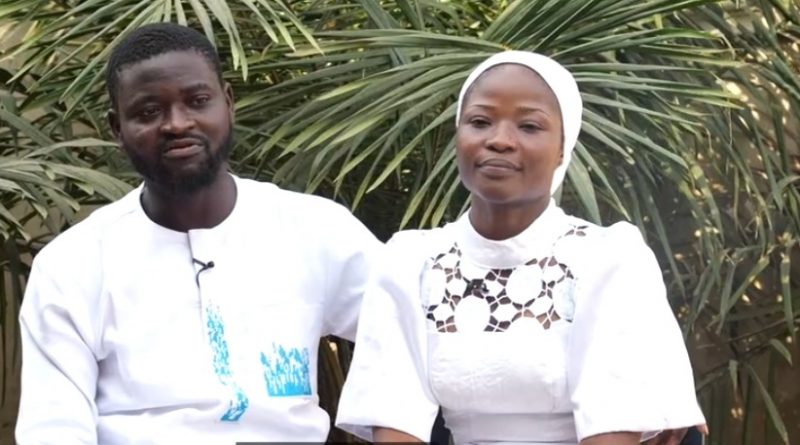
One House, Two Faiths, One Season of Fasting
Lagos — In a modest home in southwestern Nigeria, the quiet rhythm of faith shapes the day from dawn to dusk. In the kitchen, Kaosara Williams rises before sunrise to prepare a simple pre-dawn meal. Her husband, Olanrewaju Williams, joins her at the table in silence. Soon, the call to prayer will mark the beginning of her fast for Ramadan, while he begins his own observance of Lent.
For the first time since 1993, the Islamic holy month of Ramadan and the Christian season of Lent are unfolding at the same time, bringing together two traditions of fasting, prayer and reflection that rarely coincide on the calendar.
In the Williams household, that coincidence has turned into a deeply personal experience of faith, patience and mutual understanding.“We fast for different reasons, but the spirit feels the same,” said Kaosara, a practicing Muslim. “It is about discipline, gratitude and remembering those who have less.”
“Her husband, Olanrewaju, a devout Christian, agrees.Both of us wake up early, both of us pray more than usual, and both of us try to be kinder,” he said. “In many ways, the house feels more peaceful during this time.”
Ramadan follows the Islamic lunar calendar, shifting earlier each year by about 10 to 11 days in the Gregorian calendar. Lent, observed by many Christian denominations, is calculated based on the date of Easter.
Because the two calendars move differently, their overlap is rare. The last time Ramadan and Lent coincided significantly was more than three decades ago.For families like the Williamses, the convergence has created a unique moment where two spiritual traditions mirror each other in daily life.
Ramadan requires Muslims to fast from dawn until sunset, abstaining from food, drink and other physical needs while focusing on prayer, charity and spiritual renewal.Lent, which lasts about 40 days leading up to Easter, traditionally involves fasting, abstinence and acts of repentance.
Many Christians give up certain foods or habits as a form of sacrifice.Although the practices differ, the underlying themes are strikingly similar.“Both traditions emphasize self-discipline and compassion,” said Olanrewaju. “You begin to notice how often faith teaches us the same lessons in different languages.”
Despite observing different traditions, the couple has learned to structure their day around each other’s routines.Before sunrise, they share the pre-dawn meal known as suhoor, which allows Kaosara to eat before the day’s fast begins.
Later in the evening, she breaks her fast at sunset with dates and water, followed by dinner.Olanrewaju does not follow the same fasting schedule but often waits until sunset to eat with her.“It feels right,” he said. “If she has been fasting all day, I can wait a few more hours.”Their dining table has become a quiet symbol of interfaith harmony.
On some evenings, Christian prayers blend with Islamic invocations. On others, they simply sit together in silence, grateful for the meal before them.“For us, food has become a reminder of patience,” Kaosara said.
Nigeria, like many parts of the world, has seen religious tensions over the years. Yet interfaith families such as the Williamses challenge the narrative that different beliefs must create division.
The couple married more than two decades ago, deciding early that their home would respect both traditions equally.Their children grew up learning about the Quran and the Bible, attending both church services and Islamic celebrations.
“At home we never said one faith is better,” said Olanrewaju. “We said faith is about becoming a better human being.”During Ramadan, their home often fills with visitors arriving for the evening meal. During Christmas and Easter, the same friends return to celebrate Christian holidays.
“The house becomes busy all year,” Kaosara said with a laugh. “But that is how we like it.”
Religious scholars say fasting has long served as a spiritual bridge across cultures.In Islam, Ramadan commemorates the period when the Quran was first revealed to the Prophet Muhammad, and fasting is considered one of the Five Pillars of the faith.
In Christianity, Lent recalls the 40 days Jesus spent fasting in the wilderness.Both traditions encourage believers to look inward, strengthen their connection with God and show compassion toward others.For the Williams family, these teachings are not abstract ideas but daily practices.
“When you fast, you become more aware of your actions,” said Kaosara. “You think before you speak. You try to control anger. You remember people who cannot afford food.”Olanrewaju says Lent carries similar lessons.“Giving something up reminds you that life is not just about comfort,” he said.
As global headlines often highlight religious conflict, the quiet routines inside the Williams home offer a different narrative.
In the early morning darkness, when the household wakes for prayer, there is no debate about doctrine or theology. Instead, there is a shared understanding that faith, in its many forms, can coexist under the same roof.
Neighbors sometimes ask the couple how they manage the differences.Their answer is simple.“We focus on what faith teaches us about kindness,” said Olanrewaju.
The coincidence of Ramadan and Lent will last only a few weeks this year before the calendars drift apart again. But for families like the Williamses, the experience will leave a lasting impression.As sunset approaches one evening, Kaosara arranges dates and water on the table, waiting for the moment to break her fast.
Olanrewaju sits beside her, quietly reading a devotional passage.Outside, the evening call to prayer echoes through the neighborhood.
Inside the house, the couple prepares to eat together two faiths, sharing one table, in a season of reflection that belongs to them both.