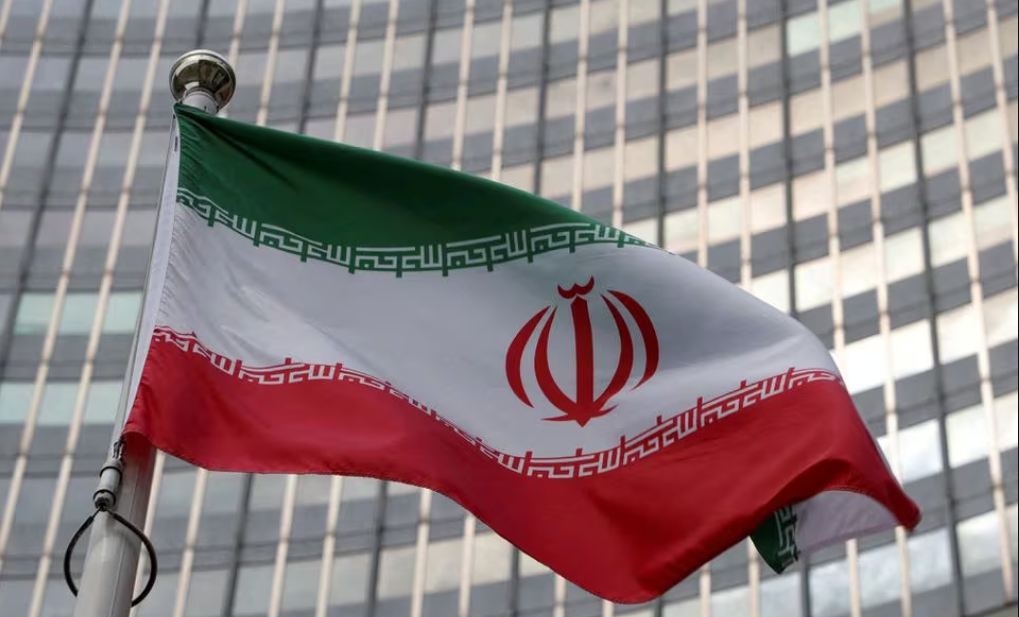
War with Iran shakes assumptions of ‘new Middle East’, analysts warn
Iran, The latest war involving the United States and Israel against Iran has pushed the Middle East into one of its most volatile periods since the 2003 invasion of Iraq, raising doubts about whether the conflict will reshape the region’s political order or deepen long-standing instability, according to regional analysis published on Thursday.
Writing in the Saudi-based outlet Arab News, Egyptian journalist and analyst Abdellatif El-Menawy said the conflict has exposed the limits of American power, the reach of Israeli military deterrence and Iran’s enduring role in the regional balance, while simultaneously revealing vulnerabilities in the Gulf’s security architecture.
The war, he argued, may prolong the Middle East’s crises rather than produce the stable “new Middle East” often invoked in policy debates.
The United States’ strategic thinking surrounding the conflict reflects an assumption seen during the Iraq war era that weakening a hostile regional power could pave the way for a more favorable political order.
.Under this logic, military pressure on Iran’s leadership and infrastructure was expected either to weaken Tehran to the point of strategic retreat or trigger domestic unrest that could alter the country’s political trajectory.
But Iran’s position in the region extends beyond the structure of its government, he argued. The country has established institutions, a complex social structure and networks of influence across several parts of the Arab world.
Because of those factors, analysts say the collapse or severe weakening of Iran could introduce additional instability rather than immediately stabilize the region.
The war has already expanded beyond limited strikes, with Iranian attacks targeting Israel, U.S. military installations and other strategic locations across the Gulf region, according to the analysis.
The conflict’s effects have also spread into global economic systems, particularly energy markets and maritime shipping routes.
Oil infrastructure across the Gulf has faced rising risks, with key pipelines, refineries and export terminals in countries including Saudi Arabia, the United Arab Emirates, Qatar, Iraq and Bahrain placed under heightened security pressure as hostilities intensify.
At the same time, the Strait of Hormuz one of the world’s most important maritime chokepoints through which roughly one-fifth of global oil trade passes has come under renewed scrutiny amid the conflict.
Any disruption to shipping through the strait could quickly reverberate through oil prices, insurance markets and international trade flows, analysts note, underscoring the region’s continued strategic significance to the global economy.
The broader implication, is that the Middle East’s geopolitical stability cannot be separated from the vulnerabilities of the global energy system.
The conflict has also raised questions in the Gulf about the long-standing security model built around U.S. military protection.
For decades, American bases in the region were viewed primarily as deterrents against external threats. However, the current conflict has highlighted how those same installations can also become targets during periods of confrontation.
This concern has roots in earlier regional shocks, including the 2019 attack on Saudi oil facilities that temporarily disrupted global oil supply and raised doubts about the effectiveness of external security guarantees.Such developments have already encouraged Gulf states to diversify their diplomatic and strategic relationships.
A notable example came in March 2023, when Saudi Arabia and Iran agreed to restore diplomatic relations in a deal brokered by China. The agreement was widely viewed as part of a broader effort by Gulf states to reduce regional tensions while balancing relations among major global powers.
Despite such diplomatic efforts, the current war has underscored the limits of de-escalation initiatives in a region shaped heavily by geography and military positioning.
As long as U.S. bases remain in the Gulf and Iran perceives those deployments as a strategic threat, regional states will remain exposed to confrontation regardless of their diplomatic preferences, analysts say.
Even if Iran emerges weakened from the conflict, the country is unlikely to disappear from the Middle East’s strategic landscape.
Instead, Tehran may rely more heavily on asymmetric strategies that aim to raise the costs of confrontation for its adversaries.
These strategies could include leveraging maritime chokepoints, economic pressure points and regional alliances to challenge what Tehran views as an American-led security structure.
Iran has historically used such methods as part of a broader deterrence approach that extends beyond conventional military confrontation.The evolving dynamics also raise questions about Israel’s role in the region.
Israel is widely viewed as having demonstrated strong intelligence and airpower capabilities through strikes deep inside Iranian territory. Yet military superiority does not necessarily translate into a stable regional order under Israeli leadership.
Accordingly a weakened Iran could in some ways heighten concerns among Arab states about the emergence of a more assertive Israel.The resulting regional balance may therefore resemble a complex triangular dynamic involving a militarily capable Israel, an injured but resilient Iran and Gulf states with substantial economic resources but growing security uncertainty.
Beyond the Middle East, the conflict also carries wider geopolitical implications.A prolonged confrontation with Iran could absorb American military and diplomatic attention, potentially creating opportunities for rival powers such as Russia and China to expand influence in other regions.
Some analysts have also warned that a shift in U.S. focus toward the Middle East could affect Washington’s ability to manage simultaneous international crises.For now, however, the conflict’s long-term consequences remain uncertain.
While the war has challenged assumptions about the durability of the existing regional order, analysts say it has not yet produced a clear alternative.Instead, the emerging picture is of a Middle East entering a period of greater fluidity, where established security arrangements face new tests and geopolitical alignments continue to evolve.