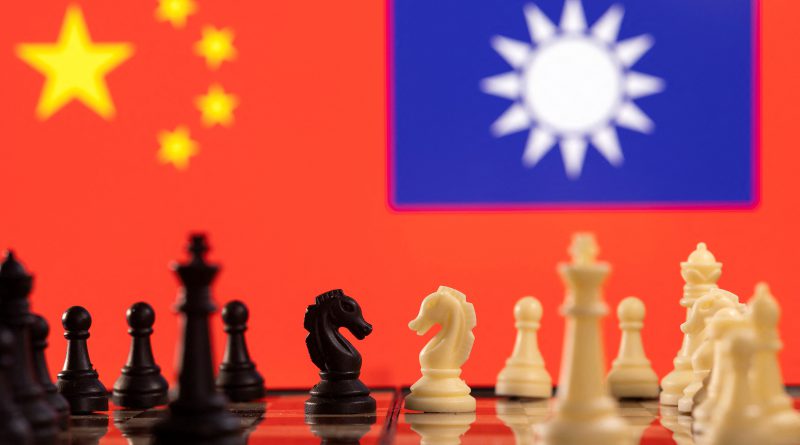
Taiwan Warns China’s Ethnic Unity Law Could Be Used to Target Independence Supporters
Taipei,Taiwan officials warned on Thursday that a newly passed Chinese law on ethnic unity could provide Beijing with an additional legal basis to pursue people it views as supporters of Taiwanese independence, citing provisions that require citizens to safeguard national sovereignty and unity.
China’s parliament, the National People’s Congress, approved the legislation on Thursday, aiming to foster a shared national identity among China’s 55 officially recognised ethnic minority groups, including Tibetans and Uyghurs.
While the law does not explicitly mention Taiwan, Beijing considers the island part of its territory and regards its people as Chinese citizens.
Shen Yu-chung, deputy minister at Taiwan’s Mainland Affairs Council, said language in the legislation could potentially extend to cross-strait issues.
Speaking to reporters in Taipei before the law was formally passed, Shen said provisions requiring citizens to protect China’s sovereignty and national unity could “spill over into becoming a legal basis for handling cross-Strait issues.
”When asked whether the law might be used to target individuals Beijing views as pro-independence activists, Shen said it was “highly possible,” adding that the definition of promoting unity remained vague while penalties could be more clearly defined.
China, which views democratically governed Taiwan as its own territory, has already introduced measures aimed at supporters of Taiwanese independence.In 2024, Chinese authorities issued guidelines to punish what they called “diehard” independence activists, with penalties that could include the death sentence, despite Chinese courts having no jurisdiction on the island.
The new legislation also contains a brief reference encouraging people on both sides of the Taiwan Strait to identify as Chinese.
The law further cites remarks by Chinese President Xi Jinping stating that citizens must “consciously uphold national unity, national security, and social stability.”
Taiwanese officials have long criticised what they describe as Chinese “lawfare,” referring to the use of legislation to create legal grounds for targeting individuals Beijing considers separatists, including those living overseas.
The new law includes provisions stating that individuals and organisations outside the borders of the People’s Republic of China can be held legally accountable for undermining ethnic unity or inciting separatism.
Shen said such language raised concerns about potential “long-arm jurisdiction,” referring to China’s efforts to apply its legal framework beyond its borders.
China’s Taiwan Affairs Office did not respond to a request for comment.