India Plans to Reduce Food Weighting in CPI Under New Inflation Series
New Delhi – India is set to revise the structure of its consumer price index by reducing the weighting of food items, a move that could significantly alter how inflation is measured and interpreted. The change is part of a broader overhaul of the inflation series aimed at better reflecting current consumption patterns and making headline inflation less volatile.
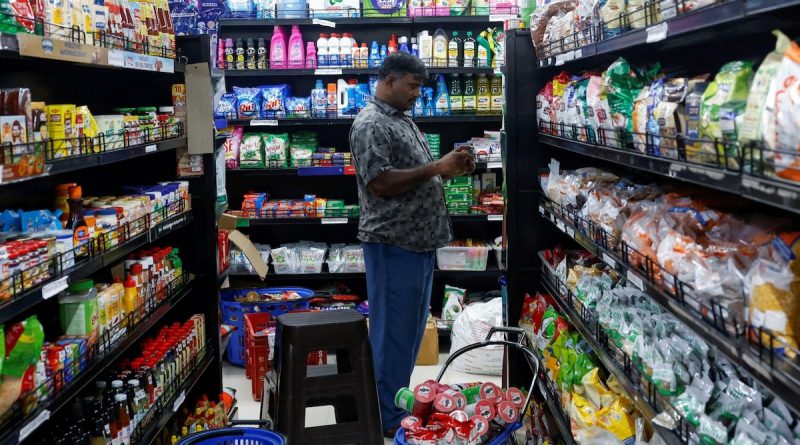
Under the new framework, the weight of food in the CPI basket will be cut to 36.75 percent from the current 45.86 percent. Food prices are known for sharp fluctuations driven by weather conditions, supply disruptions, and seasonal factors, and their heavy influence has often led to volatile inflation readings.
By lowering the food component, policymakers expect inflation data to become smoother and more stable. This could help improve the effectiveness of monetary policy, as the central bank relies on CPI inflation as the anchor for its inflation target of 4 percent with a tolerance band.
The revised CPI series will adopt 2024 as its new base year, replacing the existing structure that is still based on consumer spending patterns from 2011–12. Economists have long argued that the older base no longer reflects how Indian households spend, especially after years of rapid urbanisation and income growth.
To ensure continuity, 2025 will be used as an overlapping year between the old and new series. This approach will allow historical inflation data to be statistically converted into the new base, enabling comparisons over time without sudden breaks in the data.
Another key feature of the revision is the expansion of major CPI spending groups to 12 from the current six. This change is designed to provide more granular tracking of price movements across different segments of the economy and bring India’s inflation measurement closer to global best practices.
Recent household surveys show that food now accounts for a smaller share of consumer spending than it did a decade ago. In urban areas, food spending has fallen to just under 40 percent of household expenditure, while in rural regions it has declined to about 47 percent, reflecting shifts toward services and non-food consumption.
Housing, water, electricity, gas, and other fuels will retain a combined weight of 17.66 percent, making them the second-largest contributor to inflation. For the first time, rural house rent has been formally included in the CPI, alongside an expanded sample size for both rural and urban rent data.
Transport will account for 8.8 percent of the basket, while health, clothing, and footwear will continue to be major expense categories for households. These components ensure that essential daily costs remain well represented in the inflation calculation.
The revised CPI will also better capture India’s transition toward a service-oriented economy. Categories such as restaurants and accommodation, education, and information and communication services will each carry weights of around 3.5 percent, reflecting their growing role in household budgets.
A notable addition to the new series is the inclusion of prices from e-commerce platforms. Items such as airfares, digital subscriptions, telecom plans, and selected online services will now be tracked, acknowledging the rising importance of digital consumption in India’s economy.
Analysts believe these changes will make inflation data more realistic and policy-relevant. With food prices exerting a smaller influence, short-term supply shocks may have less impact on headline inflation, potentially allowing the central bank to focus more on underlying demand conditions.
The revision also comes at a time when inflation dynamics are evolving. Recent data showed a rise in headline inflation as the decline in food prices slowed, highlighting the sensitivity of the current CPI structure to food trends.
Overall, the new CPI series represents a significant modernization of India’s inflation framework. By aligning the index more closely with present-day consumption habits, the government aims to provide a clearer picture of price pressures facing households and policymakers alike.