India, EU Reach Landmark Trade Deal, Tariffs to Be Slashed on Most Goods
New Delhi – India and the European Union have reached a landmark free trade agreement that will significantly reduce tariffs on most goods, marking one of the most ambitious economic partnerships ever concluded between the two sides. The deal is expected to reshape trade flows, expand market access, and strengthen economic ties at a time of rising global trade uncertainty.
The agreement aims to boost two-way trade by cutting or eliminating tariffs on the vast majority of traded goods. Officials from both sides described the pact as historic, noting that it opens India’s large and traditionally protected market more widely to European businesses while improving access for Indian exporters to the EU.
Under the deal, tariffs will be reduced or removed on nearly 97% of European exports to India by value over a phased period. This is projected to significantly increase EU exports to India by the next decade, helping European firms save billions of euros in customs duties.
The European Union, in turn, has committed to cutting tariffs on 99.5% of goods imported from India over seven years. Key Indian export sectors such as textiles, leather goods, marine products, chemicals, gems, jewellery, rubber, and base metals are expected to benefit from near-zero tariffs.
Both sides agreed to exclude sensitive agricultural products from the agreement. Items such as dairy, rice, sugar, beef, and soya have been kept outside the scope of tariff reductions to protect domestic farmers and food security interests.
One of the most closely watched aspects of the deal is the automotive sector. India’s high import duties on European cars will be reduced gradually, eventually falling to around 10% over several years. This move is expected to provide a major boost to European automakers seeking greater access to the Indian market.
Indian officials said the agreement balances trade liberalisation with domestic priorities. While opening key sectors, India has sought to safeguard vulnerable industries and ensure a gradual transition for domestic manufacturers.
The deal follows nearly two decades of intermittent negotiations. Talks gained momentum in recent years as global trade tensions increased and countries looked to diversify economic partnerships beyond traditional allies.
Rising tariff disputes involving major economies have pushed both India and the EU to seek more stable and predictable trade arrangements. The agreement is seen as part of a broader strategy to reduce reliance on any single trading partner.
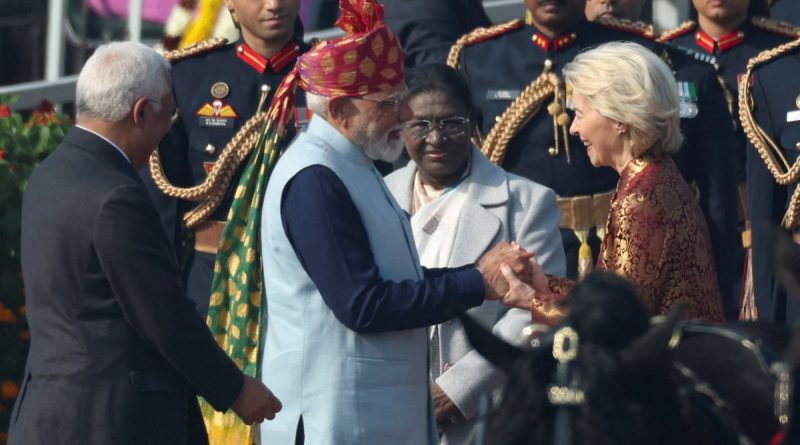
European leaders hailed the pact as a turning point in EU-India relations. They said it would create new opportunities for businesses, strengthen supply chains, and deepen cooperation between two of the world’s largest economic blocs.
India’s leadership emphasized the agreement’s potential to generate jobs, attract investment, and integrate Indian companies more deeply into global value chains. The deal is expected to benefit millions of consumers on both sides through lower prices and greater product choice.
Trade between India and the EU already stands among the largest bilateral trading relationships globally. The agreement is expected to push this figure significantly higher over the coming decade.
The pact also comes amid a wave of global trade deals. The EU has recently concluded agreements with other major partners, while India has signed or finalised trade pacts with several countries to expand its economic footprint.
Officials said the agreement would undergo legal vetting before formal signing, a process expected to take several months. Full implementation is anticipated within a year after ratification by both sides.
Analysts say the deal could serve as a model for future trade agreements involving large emerging markets and developed economies. Its scale and scope reflect changing global trade dynamics.
Businesses across sectors are now assessing how the tariff cuts will affect supply chains, pricing, and investment strategies. Many European firms are expected to accelerate plans to expand operations in India.
Indian exporters, especially small and medium enterprises, are likely to gain improved access to the EU’s vast consumer market, potentially increasing competitiveness and export volumes.
The agreement also signals closer strategic cooperation between India and the EU beyond trade, including technology, sustainability, and supply chain resilience.
Economists note that while challenges remain in implementation, the deal represents a significant step toward deeper economic integration between the two regions.
As global trade faces increasing fragmentation, the India-EU pact stands out as a strong statement in favour of open markets and multilateral cooperation.