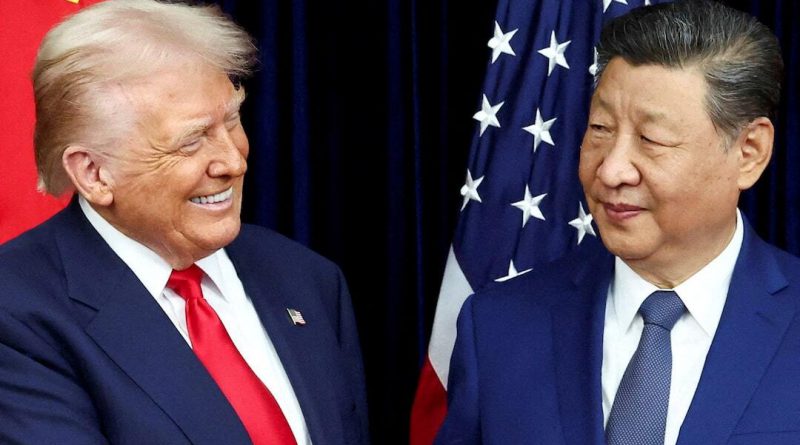
Trump’s Iran Tariff Warning Renews Focus on US China Trade Relations
Dubai – Former US President Donald Trump’s warning of possible tariffs linked to Iran has drawn renewed attention to global trade relations.
The move is being viewed as a factor that could influence economic dialogue between the United States and China.
The proposed tariff, reported to be around 25 percent, would apply to countries maintaining commercial links with Iran.
Such a step could indirectly affect Chinese exports entering the US market through higher overall duties.
China remains Iran’s largest trading partner, mainly due to long-standing energy and commodity exchanges.
This relationship has often been shaped by market needs rather than broader political alignment.
During earlier trade tensions, Iran-related issues added complexity to US-China economic discussions.
Current signals suggest that similar concerns could re-emerge in a more cautious global environment.
Recent data indicates that China has significantly reduced officially recorded imports from Iran in recent years.
This reflects growing compliance by Chinese firms with international trade rules and risk assessments.
Energy trade continues to form the core of China-Iran commercial engagement.
However, diversification beyond oil has remained limited due to financial and logistical constraints.
Chinese officials have consistently stated that tariffs create uncertainty and disrupt global supply chains.
They have emphasized dialogue and stability as preferred tools for managing trade differences.
Analysts note that tariff announcements do not always translate into fully enforced measures.
Past experiences show that implementation can vary depending on diplomatic and economic priorities.
The situation is also being closely watched in the context of broader infrastructure and connectivity projects.
Iran’s geographic position gives it logistical importance in regional trade routes.
Market participants are monitoring whether trade discussions between Washington and Beijing will ease concerns.
Future engagements are expected to focus on predictability and mutual economic interests.
Observers suggest that both sides may prefer negotiation over escalation to protect growth prospects.
Stable trade ties remain important for global markets facing slowing demand.
Overall, Trump’s tariff remarks have introduced fresh uncertainty rather than immediate policy change.
The coming months are likely to clarify whether these signals lead to concrete action or renewed talks.