
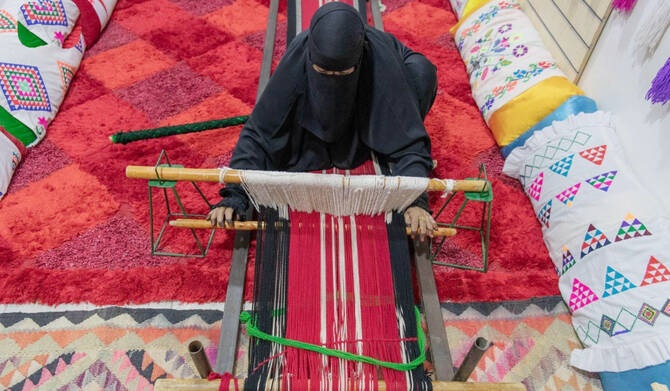
Arar’s Traditional Market Empowers Women Artisans and Preserves Heritage
Arar – Arar’s traditional market has become a vibrant cultural and economic hub that celebrates craftsmanship while supporting women artisans across the Northern Borders region.
For more than a decade, the market has played a vital role in preserving local traditions and transforming heritage skills into sustainable livelihoods.
The market has operated continuously for over 12 years as a permanent venue dedicated to showcasing women’s handicrafts.
It reflects skills passed down through generations, keeping traditional knowledge alive in a modern and accessible setting.
Dozens of women participate throughout the year, presenting a wide variety of handmade products inspired by the region’s environment.
These include Sadu weaving, embroidery, wool crafts, perfumes, incense, ghee, and traditional foods rooted in local culinary heritage.
Each product tells a story of patience, creativity, and cultural identity shaped by northern Saudi traditions.
Visitors are drawn not only to the quality of the items but also to the authenticity behind every handcrafted piece.
The market enjoys strong footfall, particularly during weekends, national celebrations, and heritage-focused seasons.
These peak periods provide artisans with increased sales opportunities and greater visibility for their work.
For many families involved in cottage industries, the market serves as a dependable source of income.
It enables women to contribute economically while working within a culturally familiar and supportive environment.
Beyond commerce, the market strengthens confidence among women artisans by giving them a public platform to present their skills.
Regular interaction with visitors helps artisans refine their products, understand customer preferences, and build lasting relationships.
The market’s design adds to its charm and cultural value.
It features 44 shops built in a traditional architectural style inspired by the northern landscape and heritage.
Natural materials, earthy colors, and traditional layouts create an atmosphere that reflects the region’s identity.
This setting enhances the visitor experience and reinforces the connection between place, people, and craft.
Training and skill development are also central to the market’s long-term impact.
Women artisans and cooks are offered free training programs that support both creative and business growth.
These sessions focus on essential areas such as commercial practices, financial awareness, and basic digital marketing.
Personal development workshops further help participants build confidence and manage their ventures more effectively.
By combining tradition with practical learning, the market supports sustainable entrepreneurship.
It ensures that heritage crafts remain relevant and competitive in today’s evolving marketplace.
The market also plays an educational role by introducing younger generations to traditional skills.
Children and youth visiting the market gain exposure to cultural practices that might otherwise fade over time.
This intergenerational exchange strengthens cultural continuity and pride in local identity.
It also encourages appreciation for handmade products in an era dominated by mass production.
Tourists visiting Arar often see the market as a key cultural attraction.
It offers an authentic glimpse into regional life, craftsmanship, and the role of women in preserving heritage.
The welcoming environment makes the market a social space as much as a commercial one.
Community interaction, storytelling, and shared experiences add depth to every visit.
Over the years, the market has evolved into more than just a place to shop.
It stands as a symbol of creativity, resilience, and cultural preservation led by women artisans.
As interest in heritage products continues to grow, the market remains well positioned to expand its impact.
Its model demonstrates how traditional skills can support economic independence while honoring cultural roots.


