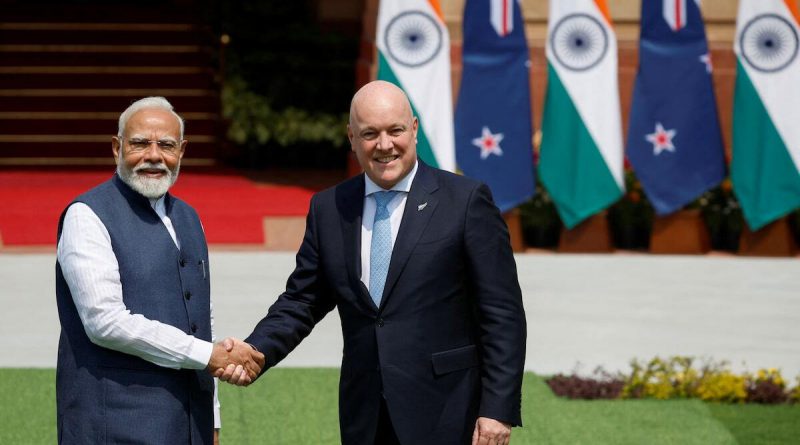
India–New Zealand Free Trade Agreement Marks New Era of Strategic Economic Partnership
New Delhi – India and New Zealand have taken a significant step toward strengthening their economic relationship with the successful conclusion of a comprehensive free trade agreement aimed at doubling bilateral trade within the next five years.
The agreement reflects a shared vision to deepen cooperation between two dynamic economies that see long-term value in open markets, resilient supply chains, and people-to-people connections.
Under the deal, a vast majority of New Zealand exports to India will see tariffs eliminated or substantially reduced, with many products gaining duty-free access from the very start of the agreement.
At the same time, all Indian goods will enjoy duty-free entry into New Zealand, opening new opportunities for Indian manufacturers, exporters, and small businesses seeking access to high-value global markets.
Leaders from both countries have described the agreement as forward-looking and balanced, designed to support growth while respecting domestic priorities and sensitivities on both sides.
New Zealand has also committed to significant long-term investment in India, signalling confidence in India’s economic trajectory and its expanding role in global trade and innovation.
The partnership builds on complementary strengths, with India’s large and fast-growing market aligning well with New Zealand’s high-quality agricultural, forestry, technology, and services sectors.
Two-way trade, which has steadily expanded in recent years, is expected to diversify further as businesses take advantage of clearer rules, lower costs, and greater predictability.
Indian exporters, particularly in pharmaceuticals, textiles, engineering goods, and digital services, are expected to gain enhanced market access and stronger integration into regional value chains.
For New Zealand, the agreement supports job creation, export growth, and closer engagement with the world’s most populous nation and one of its fastest-growing major economies.
The deal also reflects India’s broader strategy of expanding high-quality trade partnerships to support export diversification and economic resilience in a changing global environment.
Importantly, the agreement includes carefully calibrated exclusions to protect sensitive sectors, demonstrating that trade liberalisation and domestic economic stability can advance together.
Both governments have emphasized that the agreement is not only about trade numbers but also about building trust, cooperation, and long-term strategic alignment.
The pace at which negotiations were concluded highlights strong political will and a shared belief in the benefits of closer economic integration.
Beyond goods, the agreement is expected to encourage collaboration in services, innovation, education, and technology, areas where both countries see strong future potential.
As the agreement moves toward formal signing and domestic approval processes, businesses on both sides are already preparing to explore new partnerships and market opportunities.
Analysts view the deal as a positive signal for the Indo-Pacific region, reinforcing the role of open trade in driving inclusive and sustainable growth.
The India–New Zealand free trade agreement stands as an example of pragmatic diplomacy, balancing national interests while advancing shared economic prosperity.
As implementation unfolds, the partnership is expected to contribute meaningfully to economic growth, employment, and stronger bilateral ties over the coming decade.
Overall, the agreement represents a milestone in India–New Zealand relations, laying a solid foundation for expanded trade, investment, and cooperation in a rapidly evolving global economy.