Under the Arabian Stars: How Saudi Desert Nights Are Transforming Global Astrotourism
London – Saudi Arabia’s vast desert night skies are emerging as one of the world’s most captivating destinations for astronomy lovers, drawing visitors who seek unspoiled celestial beauty and a deeper connection with ancient Arabian sky traditions.
The Kingdom’s renewed focus on astronomy and cultural tourism is helping preserve centuries-old knowledge while creating modern opportunities for exploration.
Within living memory, desert travelers and sailors depended on star patterns to navigate Arabia’s wide landscapes.
Today, that heritage is being revived as stargazing becomes central to the Kingdom’s cultural revival and its ambition to offer world-class tourism experiences rooted in science, nature, and history.
The region once inspired great astronomical innovation during the Golden Age of Islam, when scholars mapped the heavens and named many stars still recognized worldwide.
Arabic-origin terms such as azimuth, nadir, Aldebaran, and Altair reflect this enduring legacy and illustrate the deep historical bond between Arabia and the night sky.
In northwestern Saudi Arabia, this ancient fascination is being brought back to life through the development of AlUla Manara, an upcoming landmark designed to blend celestial heritage with cutting-edge science.
Planned near the archaeological wonders of Hegra, it will provide a gateway where visitors can explore astronomical research, interactive exhibits, high-tech telescopes, and atmospheric stargazing zones.
The facility is envisioned as a space where the mysteries of the universe unfold in a setting shaped by desert silence and sweeping rock formations.
With immersive workshops and sky observation platforms, AlUla Manara aims to transform stargazing into a cultural and educational journey.
AlUla’s natural conditions already make it a coveted destination for astrotourism, with its surrounding reserves recently designated as an International Dark Sky Park.
This recognition highlights the region’s exceptional clarity, environmental protection measures, and long-term conservation efforts to safeguard naturally dark skies.
Covering more than 2,300 sq. km, these skies allow travelers to witness stars as vividly as ancient caravans once did, free from modern light pollution.
Visitors experience panoramas where the Milky Way stretches across the horizon and constellations glow with remarkable intensity.
The expansion of astrotourism has also strengthened appreciation for land-based heritage, from Nabataean archaeological sites to towering sandstone formations.
These landscapes create a dual experience where Earth’s history and cosmic views complement each other in harmonious balance.
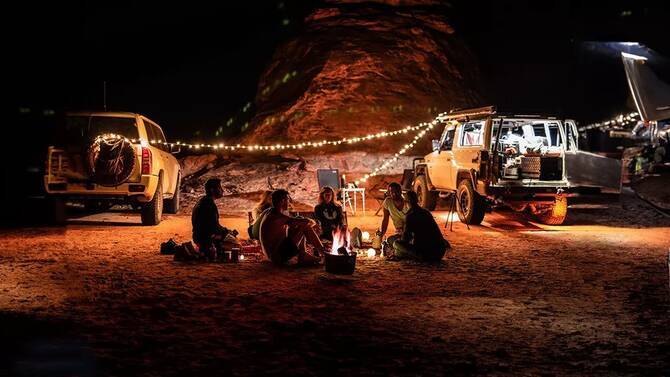
Tourists are already arriving for guided night outings where Bedouin storytelling blends with astronomy lessons under the desert sky.
These experiences celebrate cultural traditions while introducing newcomers to celestial navigation and desert folklore.
Saudi astronomer Nawal Al-Anazi, a pioneer in the field, has expressed excitement about the merging of astronomy and tourism.
She notes that the Kingdom’s deserts offer some of the clearest skies in the world, ideal for both telescopic observation and naked-eye stargazing.
Her passion for the stars began in childhood desert trips, where learning constellations was part of family outings.
Today she encourages new stargazers to travel at least 100 kilometers away from cities to escape light pollution and fully enjoy the celestial view.
Winter months from October to March provide the best stargazing conditions due to cooler temperatures and clear air.
Mobile apps such as Stellarium or Skyview help visitors identify stars, planets, and passing satellites as they explore the heavens.
As AlUla Manara develops, excitement continues to grow around Saudi Arabia’s role as a rising destination for cultural astronomy.
The Kingdom’s combination of natural beauty, historical heritage, and scientific innovation is creating a new global hub for sky enthusiasts.