India Confident of Achieving 7% Growth as Strong Fundamentals Drive Economic Momentum
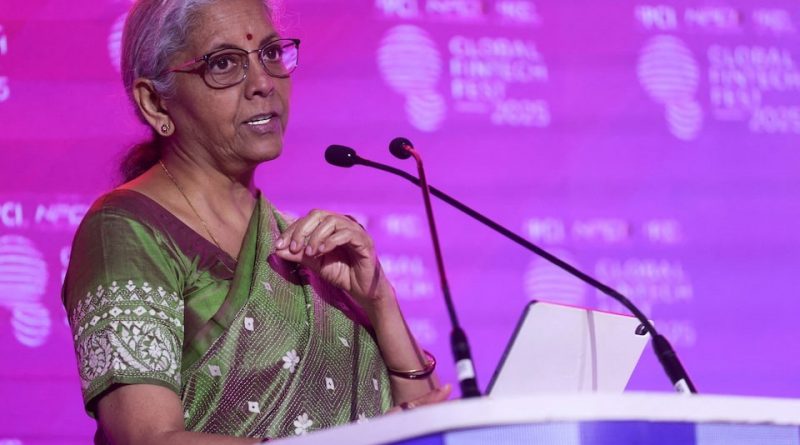
New Delhi – India’s economic outlook remains firmly optimistic as Finance Minister Nirmala Sitharaman projected growth of at least 7% for the current fiscal year, reinforcing confidence in the country’s resilient fundamentals. Speaking at a leadership summit, she emphasized that India’s economic trajectory continues to stay strong despite global uncertainties, tariff pressures and volatile financial conditions abroad.
The finance minister highlighted that India’s consumption-driven economy is well supported by easing inflation and recent reductions in goods and services tax rates. These measures are expected to keep domestic demand stable, encouraging spending across sectors and strengthening overall economic activity. Recent GDP data has reinforced this optimism, with the economy growing at an impressive 8.2% in the second quarter, driven by festival-related demand and a surge in production activity.
India’s monetary policy stance has further supported this momentum. The Reserve Bank of India recently lowered the repo rate by 25 basis points, improving credit availability for businesses and households. The central bank simultaneously revised its GDP growth forecast upward to 7.3%, signaling strong confidence in India’s ability to maintain a steady pace of expansion. With inflation estimates also reduced, macroeconomic stability is expected to play a key role in sustaining growth through the year.
Amid global pressures such as higher U.S. tariffs and a widening trade deficit, India has accelerated reforms aimed at strengthening its domestic economy. Changes in labour regulations, rationalised tax structures and streamlined financial sector rules reflect the government’s long-term strategy to enhance competitiveness and foster a business-friendly environment. These reforms are contributing to healthier investment sentiment and supporting domestic manufacturing and services.
Sitharaman also noted the increased retail participation in India’s financial markets, which highlights rising investor confidence. Lower interest rates, strong corporate performance and greater financial inclusion are driving more individuals toward equity markets. At the same time, home-loan demand has picked up significantly, signaling renewed vibrancy in the residential sector and reflecting broader trust in the economy’s stability.
In discussing currency trends, the finance minister said the rupee would continue to find its natural market value. While depreciation has posed challenges, she emphasized that exporters are benefiting from the weaker currency, especially as it aligns with recent tariff adjustments. This balance supports India’s trade competitiveness and helps diversify revenue flows for businesses engaged in global markets.
India’s position as the world’s fifth-largest economy is being reinforced by its consistent growth performance and ability to weather international challenges. Robust domestic demand, a dynamic financial sector and targeted policy interventions have created an environment where economic stability and progress can coexist even amid shifting global conditions. The government’s focus remains on sustaining reforms, strengthening supply chains and encouraging technology-driven innovation to support long-term development.
The broader economic narrative reflects a confident, future-focused India intent on expanding opportunities for businesses and citizens alike. With strong fundamentals, proactive governance and rising global relevance, India’s economic outlook remains bright. The commitment to maintaining a stable macroeconomic framework while encouraging growth-oriented reforms ensures that the country is well-positioned to achieve and even surpass its projected growth targets.