Circular Economy Forum in Riyadh Highlights Global Push for Sustainable Innovation
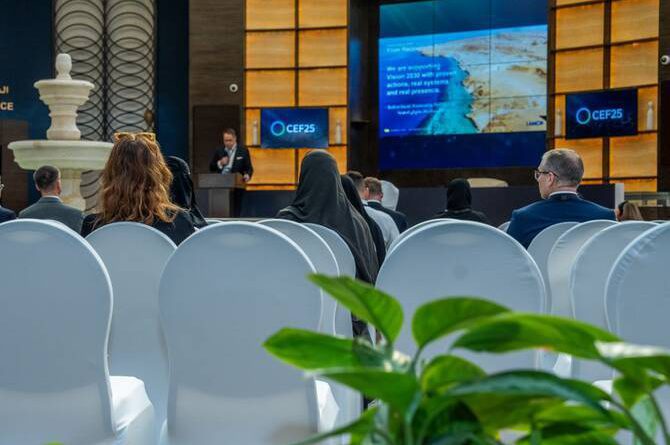
Riyadh – Policymakers, entrepreneurs, researchers, and industry leaders convened in Riyadh for the Circular Economy Forum, an event focused on how circularity-driven solutions are reshaping industries, sustainability priorities, and long-term development strategies across multiple sectors.
The gathering, which runs until Dec. 2, is positioned as a platform for advancing dialogue on innovation, practical implementation, and economic resilience.
Organizers described the forum as a space for aligning environmental responsibility with economic progress, emphasizing the need for cooperative models that link environmental compliance, public strategy, and private-sector execution.
Speakers noted that circular economy frameworks are becoming essential to national policymaking as countries seek to reduce waste, improve efficiency, and adapt to climate-related challenges.
Officials from several nations participated in the sessions, stressing the urgency of accelerating sustainable practices amid global resource constraints.
They highlighted the rising demand for clean technologies and the expanding feasibility of deploying them at scale, particularly in fast-growing economies that are seeking to diversify their industrial bases.
Delegations also discussed opportunities for cross-border collaboration, describing resource efficiency and reduced carbon footprints as shared objectives that require coordinated action.
Participants said that forums of this nature help identify emerging technologies and build pathways for joint development initiatives between governments and global innovators.
The forum included appearances from international guests who underscored their countries’ experiences in advancing circularity principles.
They outlined case studies ranging from renewable energy integration to sustainable manufacturing, noting that the circular model has become central to both economic planning and environmental strategy.
High-level attendees included policymakers, sustainability advocates, and leaders from technology-focused organizations exploring how circular systems can support long-term competitive advantage.
They emphasized that the shift toward circularity is no longer confined to environmental policy but is now deeply tied to industrial modernization and investment planning.
The event opened with a cultural performance by a Nordic-Saudi cello ensemble, symbolizing the broader theme of collaboration and exchange.
Organizers said the artistic introduction highlighted the role of creativity in shaping a forward-looking sustainability vision.
Industry leaders at the forum stressed the importance of uniting public policy with private innovation to build new value chains.
They said that countries positioning themselves as technology hubs must create incentives that attract investment and encourage the development of advanced industrial capabilities.
Technology executives noted that the Kingdom is moving toward becoming not only an adopter of new energy solutions but also a developer of innovation-driven ecosystems.
They pointed to ongoing national initiatives that support research, manufacturing partnerships, and the localization of high-tech industries.
Special focus was given to energy storage, efficiency, and digital tools that enable circular resource management.
Speakers said these technologies are critical for reducing waste, improving productivity, and meeting broader sustainability targets.
Business leaders explained that effective circular systems depend on strong policy foundations paired with robust execution by companies.
They said long-term transformation requires coordination between regulators, technology providers, and investors to ensure that solutions can be commercialized and scaled.
Delegates also discussed how emerging markets can leverage their current momentum to adopt cutting-edge innovations more quickly than traditional industrial economies.
According to participants, rapid technology deployment, supported by national strategies and investment frameworks, could position such markets as global leaders in sustainable development.
Sessions throughout the forum explored how circular models could influence manufacturing, mobility, energy generation, and urban design.
Experts said that integrating these models into economic planning could accelerate national goals related to efficiency, resilience, and environmental stewardship.
Speakers concluded that the region’s growing interest in circular economy principles reflects a broader global shift toward sustainability-driven competitiveness.
They emphasized that large-scale transformation will require continuous dialogue among governments, industries, and innovators, along with the capacity to translate ideas into operational change.