Military is Rewriting Pakistan’s Democracy and Its Politicians Are Helping

In this military power grab, the role of Pakistan’s major political parties has been one of facilitation.
Pakistan is living through a quiet constitutional gerrymandering whose ramifications are not loud street protests. Rather, there is a slow and a methodical shift being orchestrated by an increasingly assertive military establishment, which is duly enabled by pliant political parties eager to comply. The objective of this change is simply to transform Pakistan into a military-dominated hybrid authoritarian system with a façade of civilian executive.
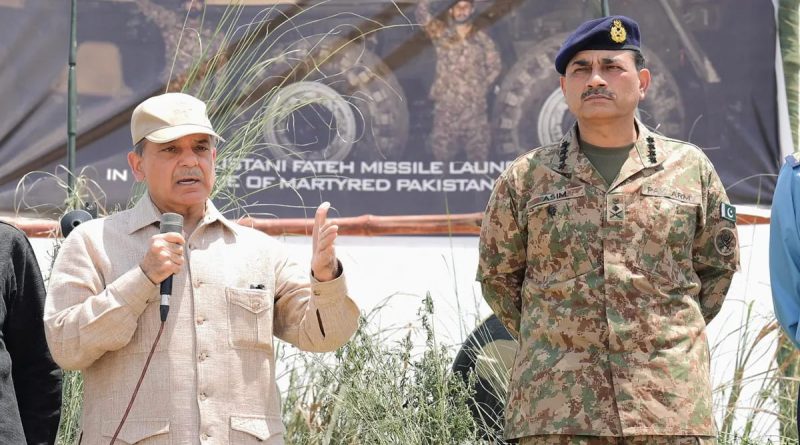
The chief architect of this new order is Field Marshal Asim Munir, inarguably Pakistan’s most powerful army chiefs ever. Under his tenure, the military has moved beyond the historical pattern of backstage control and intermittent coups. Instead, the goal now appears to be structural dominance embedded into law, bureaucracy, and constitutional text to make military supremacy not an aberration but the core of the state.
This transformation did not happen overnight though. It began with seemingly smaller amendments to Pakistan’s military laws (Army/Air Force/Navy) in 2023, which were endorsed by the political parties without protest both inside and out of the National Assembly. These changes expanded the reach of military courts, allowing civilians to be tried under military jurisdiction.
This followed the violent anti-government protests of May 9, 2023, when protestors targeted dozens of military installations across Pakistani provinces, including Lahore and Peshawar. Besides hundreds of protestors, the most high-profile target of this expanded legal control has been former Prime Minister Imran Khan, who remains imprisoned alongside his wife, Bushra Bibi, facing dozens of cases that critics argue serve political rather than judicial ends.
From there, the military’s influence has migrated deeper into civilian space. Munir’s consolidation included the time-tested policy of parachuting military officers into key civilian institutions such as NADRA, WAPDA, SUPARCO, among others. The appointment of Lt. Gen. Asim Malik, the Director-General of Pakistan’s powerful intelligence service, ISI, and as National Security Adviser marked an unmistakable shift.
This significant civilian post which traditionally functioned as the bridge between civilian governance and military command was no longer a boundary at all. But the most significant restructuring has come through constitutional amendments. The 26th Amendment, passed in late 2024, expanded the tenure of military service chiefs from three to five years, with potential extensions matching those expanded terms.
This effectively allows a single military chief to shape Pakistan’s governance for more than a decade, as is the case with Asim Munir who seems poised to be in office till 2032 at least. In parallel, the amendment broadened the government’s role in judicial affairs, tightening political oversight over judicial appointments and administration. Judiciary was the last bastion where the military establishment could not otherwise influence directly.
The latest the 27th Amendment goes even further. It formalized Munir’s new role as Chief of Defence Forces (CDF), a new title that elevates the Army Chief as the overarching commander of Pakistan’s military forces. It also granted him an enhanced role in the management of the country’s nuclear assets, otherwise overseen by the prime minister led strategic command.
While Pakistan has long been a nuclear-armed state under tight military control, the legal codification of this role marks a decisive break from earlier ambiguity. As such, the civilian oversight, which was anyway already weak, is now further downgraded.
It is true that power consolidation by military leaders is not new in Pakistan. From Ayub Khan to Zia ul-Haq and Pervez Musharraf, all have reshaped the political system in their favor but only after military coups. However, what distinguishes the current phenomenon is how seamlessly key civilian institutions, particularly political parties, have not only accepted this shift but overtly and covertly facilitated this power grab.
Moreover, the 27th Amendment practically split Pakistan’s highest judicial institution of Supreme Court into two by creating a new Federal Constitutional Court (FCC) while significantly reducing the Supreme Court’s discretionary powers such as suo moto. The amendment’s timing and intent are unmistakable as this restructuring limits the SC’s ability to overview the military-driven changes now being encoded into law.
As such, the judiciary, which was once seen as an unpredictable check on military authority, is now practically subdued. This has made Pakistan’s courts being increasingly viewed not as arbiters of the constitution but as instruments to legitimize the very forces reshaping it.
In this military power grab, the role of Pakistan’s major political parties has been one of facilitation. Far from resisting creeping military dominance in civilian affairs of the state, they appear to be competing for its approval, demonstrating how civilian leadership remained conditional on military favor.
Take the role of Sharif family’s Pakistan Muslim League-Nawaz (PML-N). The party ostensibly became the biggest beneficiary of the military-backed removal of Imran Khan’s government in 2022. Shehbaz Sharif became prime minister for the remainder of the National Assembly’s tenure. Interestingly, it was during this period that the PML-N government appointed Asim Munir as Army Chief bypassing several of his senior officers.
But its reward came soon when the party received the dividends of military’s electoral engineering during the controversial 2024 general elections positioning Shehbaz Sharif to form the government once again. Likewise, the Pakistan People’s Party (PPP), once the standard-bearer of civilian resistance to military authoritarianism, is willingly playing an equal accomplice to PML-N in facilitating the military’s entrenchment.
What has consequently emerged is a political landscape where parties no longer seek to govern through popular mandate, institutional accountability, or democratic legitimacy, if at all there is any, but through proximity to the military. While the façade of democracy is still visible, but the center of gravity has shifted decisively towards military.
What this translates into is a form of managed system where rituals may remain but the outcomes are predetermined. And the consequences of this system will be far-reaching. It is true that Pakistan has long struggled with the balance between civilian authority and military dominance. But what distinguishes the current phenomenon is how its political class is willingly facilitating the establishment’s creeping dominance and how the military is shedding the façade of its backstage control.
As such, democracy in Pakistan, however fragile it was, is not fading with a dramatic collapse but is being dismantled through amendments, appointments, legal reforms, and political bargains; all in piece by piece.
Disclaimer: Views expressed by writers in this section are their own and do not reflect Milli Chronicle’s point-of-view.